The 2026 Argo CD User Survey shows GitOps has moved from early adoption to enterprise-scale maturity. Scaling replaces environment modeling as the top challenge, while Flux's 10-year anniversary highlights a decade of evolution. Here's what the data says about the state of deployment automation.
Flux celebrates 10 years of GitOps, Argo CD v3.5 RC brings security hardening and Helm 4 support, HCP Terraform Infragraph enters limited availability, Backstage v1.52 overhauls catalog stitching, and platform engineering officially becomes the default operating model for software delivery.
A wave of major releases from Flux, Argo CD, Tekton, and HashiCorp reshapes the GitOps and platform engineering landscape with plugins, UI improvements, composable pipelines, and AI-driven infrastructure.
CircleCI launches agent-first microVM sidecars, GitHub adds coverage merge protection rules, Argo CD v3.5 and Flux v2.9 ship enterprise hardening features, and HashiCorp connects Terraform to AI agents via MCP — June 2026 shows DevOps tooling is being rebuilt for agentic coding workflows.
In 2026, the conversation around AI-assisted operations has shifted from writing better prompts to designing loops that run without human intervention. Here is how platform engineering and GitOps are converging to make that possible.
CircleCI, HashiCorp, and Dynatrace unveiled agent-native infrastructure this week, while CodeQL, Backstage, OpenTofu, and Tekton shipped significant updates.
GitHub Copilot's agent-first IDE, CircleCI's sidecar validation, and HashiCorp Vault's SCIM integration are converging to create a new paradigm for DevOps and platform engineering in 2026.
The DevOps and Platform Engineering space is undergoing one of its most significant shifts in years. In May 2026, major tooling vendors and open source projects are converging on a common theme: AI-powered development workflows must be paired with robust validation, infrastructur
Platform engineering is not merely DevOps renamed—it represents a fundamental shift in how organizations build internal developer platforms that reduce cognitive load and accelerate delivery.
Agentic AI is reshaping software development in 2026. From LangGraph and CrewAI to Microsoft's new Agent Governance Toolkit, discover how autonomous agents are becoming production-ready teammates for infrastructure, security, and DevOps workflows.
A comprehensive guide to the agentic AI framework landscape in 2026. From LangGraph to CrewAI to OpenAI Agents SDK, we examine the trade-offs, use cases, and production considerations for building autonomous multi-agent systems.
By end of 2026, 40% of enterprise applications will embed AI agents. Explore the multi-agent frameworks, A2A protocol, security challenges, and practical applications of agentic AI in software development.
Kubernetes 1.36 drops April 22 with 80 enhancements including stable user namespaces, OCI VolumeSource, and the retirement of Ingress NGINX. Plus: CNCF warns that Kubernetes alone isn't enough to secure LLM workloads.
The DevOps landscape in 2026 is transforming through agentic AI, platform engineering maturity, GitOps standardization, OpenTelemetry adoption, and supply chain security requirements. From AWS DevOps Agent to self-architecting systems, discover how these converging trends are reshaping software delivery.
OpenClaw's March 2026 release removes nodes.run, hardens plugin security, and restructures background tasks into a proper control plane.
Kubernetes 1.36 preview shows DRA hardware maintenance support and Linux User Namespaces graduating to GA for April 2026 release.
After six months in public preview, GitHub custom images for GitHub-hosted runners are now generally available. Organizations can now define pre-configured VM images with tools and dependencies baked in.
Argo Rollouts graduates to General Availability, bringing stable APIs and production-ready progressive delivery capabilities for Kubernetes deployments.
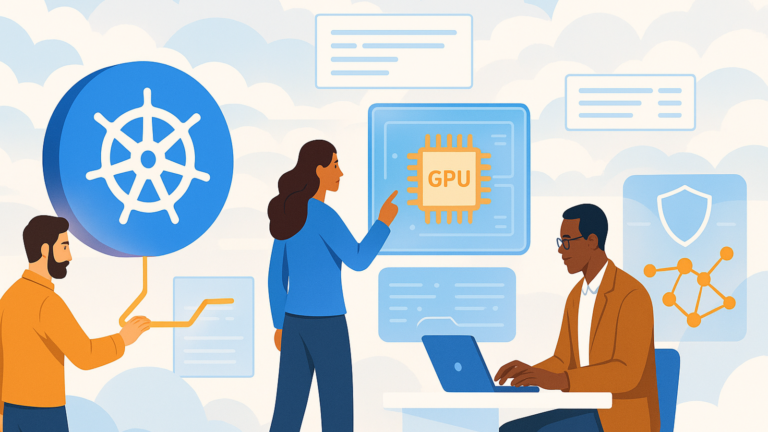
Kubernetes v1.30 brings Dynamic Resource Allocation to GA, improved Pod Security Standards, and enhanced memory QoS—key updates for platform engineering teams.
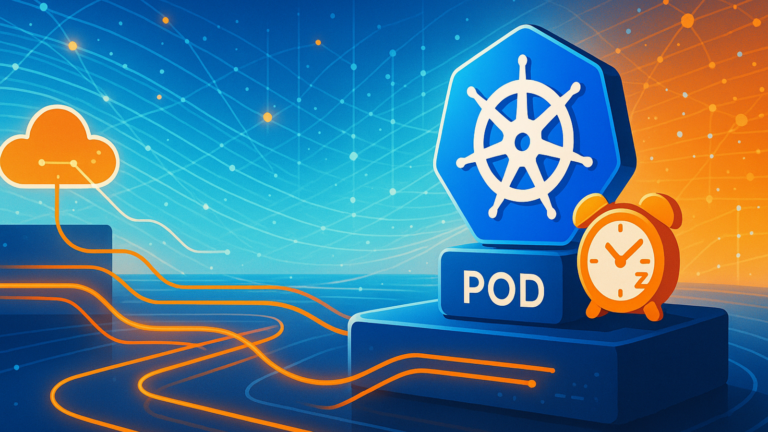
Kubernetes v1.30 introduces the PodLifecycleSleepAction feature, providing configurable sleep windows during pod termination to prevent dropped connections and request failures.