
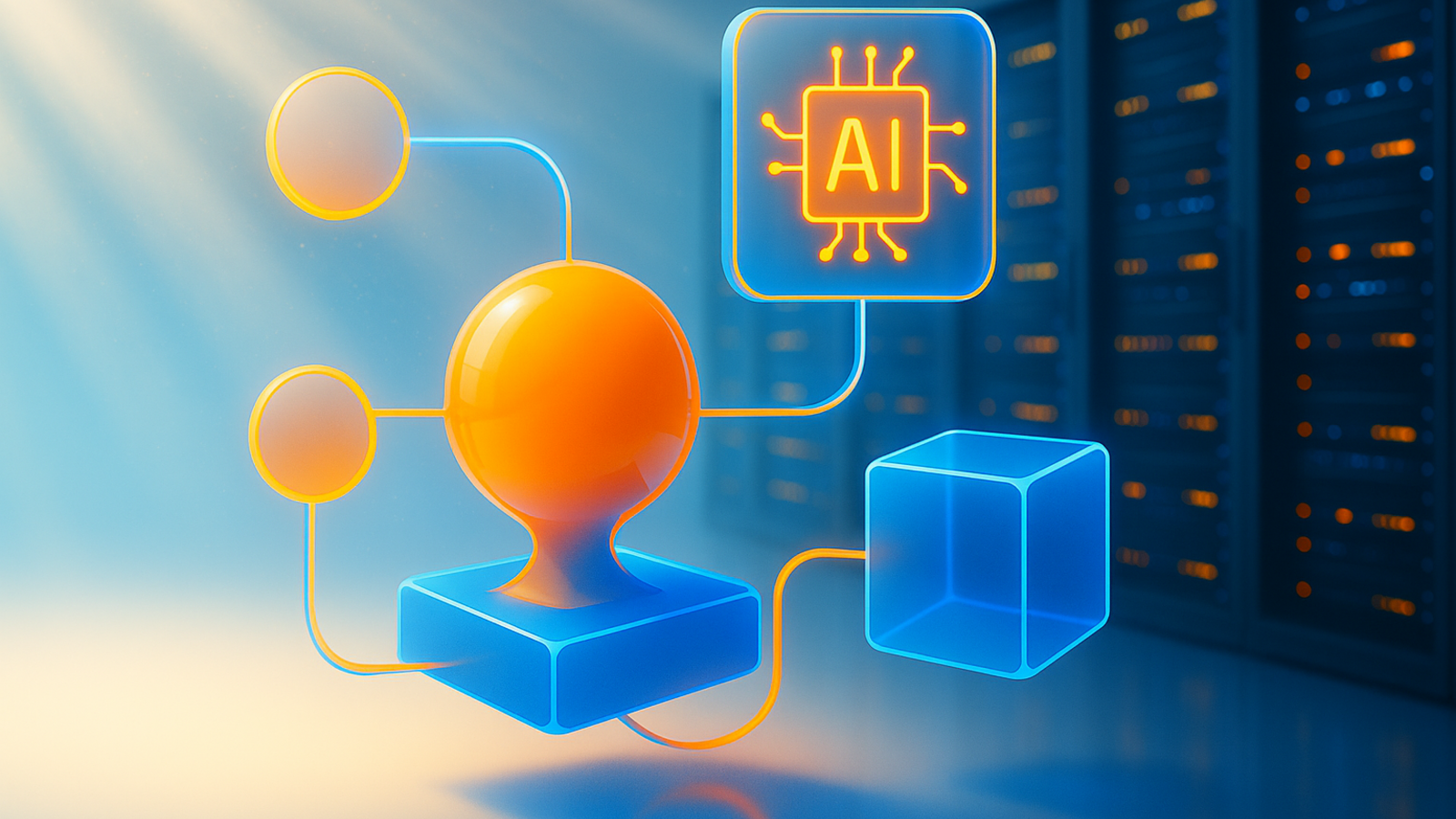
In the span of one week in July 2026, three major AI labs shipped significant agentic platform updates. OpenAI launched GPT-5.6 alongside ChatGPT Work, an agent designed for multi-step enterprise tasks. Google expanded its Managed Agents in the Gemini API with background execution and remote MCP server support. Mistral rebranded Le Chat as Vibe, a unified agent spanning work and code. Meanwhile, Anthropic released Claude Science, and NVIDIA published new open datasets for training agents. The signal is unmistakable: agentic AI has moved from research curiosity to enterprise infrastructure.
What distinguishes this wave from earlier “AI agents” is the shift from single-turn chat completion to persistent, multi-step workflows that integrate with enterprise systems. These platforms do not merely answer questions; they plan, execute, iterate, and persist across hours or days. For platform engineers and enterprise leaders, the question is no longer if to adopt agentic systems, but which platform to bet on and how to govern them.
OpenAI’s Agentic Push: GPT-5.6 and ChatGPT Work
OpenAI’s July 9 releases established a new benchmark for frontier agentic models. GPT-5.6 introduces a family of models — Sol, Terra, and Luna — with a focus on performance per dollar rather than raw parameter count. On the Agents’ Last Exam benchmark, which evaluates long-running professional workflows across 55 fields, GPT-5.6 Sol scored 53.6, surpassing Anthropic’s Claude Fable 5 by 13.1 points. More strikingly, GPT-5.6 Terra and Luna matched or exceeded Fable 5’s performance at roughly one-sixteenth the cost.
The efficiency gains come from programmatic tool calling and an ultra reasoning mode that coordinates up to four parallel agents. Rather than passing every tool result back through the model, GPT-5.6 can write and run lightweight programs that filter intermediate data, monitor progress, and choose next actions autonomously. On Terminal-Bench 2.1 and DeepSWE — benchmarks for complex command-line workflows and long-horizon engineering in real codebases — GPT-5.6 Sol set new state-of-the-art results.
Paired with the model is ChatGPT Work, an agentic layer inside ChatGPT that connects to enterprise apps — Slack, Microsoft Teams, Google Drive, SharePoint, CRMs, and calendars — to execute multi-step tasks. OpenAI reports that nearly 100% of its internal teams, including finance and sales, now use ChatGPT Work. In one case, a sales team turned a discovery conversation into a tailored proof of concept within 24 hours, a process that previously took weeks. In finance, month-end close and forecasting dropped from days to hours.
Crucially, ChatGPT Work supports Scheduled Tasks, allowing the agent to continue operating independently — monitoring inboxes, updating documents, and alerting users when work completes. This moves the paradigm from synchronous chat to asynchronous, background agent execution.
Google DeepMind: Managed Agents With Production Infrastructure
While OpenAI focused on end-user experience, Google targeted developers with expanded Managed Agents in the Gemini API, announced July 7. The Gemini Interactions API already handles reasoning, code execution, package installation, file management, and web browsing inside an isolated cloud sandbox. The July update adds four capabilities directly addressing production deployment concerns.
First, background execution allows long-running tasks to run asynchronously. Instead of holding fragile HTTP connections open, developers pass background: true and receive an interaction ID to poll or stream progress later. This is a practical necessity for agents that might run for minutes or hours.
Second, remote MCP server integration enables managed agents to connect directly to private Model Context Protocol servers. Developers no longer need custom proxy middleware to expose internal databases or APIs; the agent communicates with endpoints from its secure sandbox. This significantly lowers the barrier to connecting agents to existing enterprise infrastructure.
Third, custom function calling alongside built-in sandbox tools allows hybrid execution: built-in tools run automatically on Google’s servers, while custom functions transition to the client for local business logic. Fourth, credential refresh across interactions handles long-lived authenticated sessions without manual re-authentication.
Google’s approach emphasizes developer control and security best practices — a deliberate contrast to consumer-facing agent platforms. For enterprises already invested in Google Cloud, this tight integration with Gemini API and existing identity systems is a compelling path.
Mistral Vibe: One Agent for Work and Code
Mistral’s rebranding of Le Chat to Vibe signals a unified agent strategy that combines work and coding in one interface. Vibe offers two modes: Work Mode for long-range tasks across enterprise tools (inbox management, research, document drafting, data analysis), and Code Mode for remote coding sessions that persist across web, VS Code, and terminal.
In Work Mode, Vibe grounds itself in enterprise knowledge — Google Workspace, Outlook, SharePoint, Slack, GitHub — and produces deliverables via a Canvas tool. Users can schedule tasks to run on daily, weekly, or monthly cadences. Reusable “skills” extend the agent via open standards for repeatable workflows. Every reasoning step and tool call is inspectable, addressing a common enterprise concern about agent opacity.
For developers, Vibe’s remote coding agents run in isolated sandboxes, generate reviewable diffs, and ship pull requests. Sessions persist while the user’s machine is offline. A new VS Code extension brings the agent directly into the editor, reading and editing files alongside the developer. This dual-mode architecture — one agent, two contexts — is an interesting bet that knowledge work and software engineering are converging rather than diverging.
Anthropic and the Science Niche
While the platform giants race for enterprise productivity, Anthropic carved a narrower but deeper lane with Claude Science, an AI workbench for scientists launched at the end of June. The customizable app integrates tools and packages researchers commonly use, produces auditable artifacts, and provides flexible access to computing resources.
Claude Science does not aim to replace scientific method; it aims to accelerate the repetitive parts — literature review, data processing, experiment documentation — while preserving the transparency and reproducibility that science demands. For research institutions and R&D teams, this specialized approach may prove more valuable than general-purpose agent platforms.
The Open Data Foundation
Underlying all these agent platforms is a growing recognition that models need better training data to act reliably in the real world. NVIDIA, in collaboration with Hugging Face, published a July 8 blog post on open data for agents, arguing that synthetic data is essential for scaling agentic AI beyond narrow benchmarks.
The Nemotron open datasets — spanning software engineering traces, tool-use failures, multi-step reasoning, retrieval, safety, and user simulation — are designed to make agent behavior inspectable and explainable. As NVIDIA’s VP of Applied Deep Learning Research Bryan Catanzaro noted, companies are built around secrets (workflows, customer patterns, proprietary data), and synthetic data offers a way to preserve useful signals without exposing underlying sources.
This open-data movement matters because agent reliability directly correlates with training data diversity. If every model learns from the same narrow pool, agents will fail in the same predictable ways. Open datasets provide the substrate for independent evaluation and improvement.
What Enterprises Should Watch
For enterprises evaluating agentic AI platforms, five dimensions merit attention:
- Governance and visibility: Can you see what the agent is doing, which tools it accesses, and what data it touches? OpenAI’s admin console, Google’s step-matching execution, and Mistral’s inspectable reasoning chains each approach this differently. Without this visibility, an AI investment becomes a black box that finance teams cannot justify and security teams cannot audit.
- Integration depth: Does the platform connect to your existing tools (Slack, Teams, CRMs, databases) via standard protocols like MCP, or does it require custom middleware? Google’s remote MCP support and Mistral’s connector ecosystem are promising here. The more native the integration, the less bespoke engineering is required to make the agent useful.
- Cost efficiency: Agentic workflows can consume tokens at scale. GPT-5.6’s pricing efficiency and parallel agent coordination are meaningful advantages, but only if the work produced justifies the spend. OpenAI’s July 14 post on managing AI investments in the agentic era emphasizes measuring useful work per dollar — tasks completed, time saved, and workflows scaled. Leaders should track cost per accepted outcome: a resolved support ticket, a passing code review, a completed forecast cycle.
- Safety and resilience: Anthropic’s Fable 5 jailbreak severity framework, developed with Amazon, Microsoft, Google, and other Glasswing partners, represents an industry-wide effort to standardize how we measure and mitigate adversarial attacks on agent systems. As agents gain more autonomy, the attack surface expands. Any platform evaluation should include red-teaming and automated safety testing.
- Human-in-the-loop design: The most effective agentic deployments do not remove humans; they reallocate them. Sales reps become consultative partners. Finance analysts become strategic advisors. Scientists focus on hypothesis design while agents handle data wrangling. Platforms that support approval gates, review checkpoints, and correction loops will see higher adoption than fully autonomous systems.
The Multi-Agent Challenge
OpenAI’s ultra reasoning mode coordinates four parallel agents by default, with configurations scaling to sixteen. This is not merely a performance optimization; it reflects a deeper architectural shift. Single-agent systems struggle with tasks that require simultaneous exploration of multiple hypotheses or parallel workstreams. Multi-agent architectures allow one agent to research while another drafts, while a third verifies facts against primary sources.
But multi-agent systems introduce their own complexity: agent-to-agent communication protocols, consensus mechanisms, conflict resolution, and orchestration overhead. Google’s Gemini Interactions API handles this inside a managed sandbox, abstracting the complexity from developers. Mistral’s remote coding agents run in parallel sessions. The industry is converging on a pattern where the orchestration layer becomes as important as the model itself. Enterprises should evaluate not just the model family, but the orchestration primitives — background execution, parallel coordination, checkpointing, and recovery — that the platform provides.
The Tooling Layer
No discussion of agentic AI is complete without the infrastructure that runs it. OpenClaw’s v2026.7.1 release, published July 14, brings expanded model and provider support including GPT-5.6 compatibility, along with stronger Codex and connected coding-agent workflows. Telegram, Slack, Discord, and Apple Messages each received substantial updates. For teams building agentic applications, the maturity of orchestration platforms like OpenClaw directly impacts how quickly ideas move from prototype to production.
Similarly, Hugging Face’s July 8 announcement of a native-speed vLLM transformers modeling backend improves inference throughput for open models running agentic workloads. When agents make dozens or hundreds of model calls per task, inference latency and cost become first-order constraints. The open-source tooling ecosystem — vLLM, Ollama, LiteLLM, LangChain, LlamaIndex — continues to mature in parallel with the proprietary platforms, giving enterprises a choice between managed services and self-hosted stacks.
Bottom Line
Agentic AI is no longer a future promise. In July 2026, it is a competitive infrastructure decision. OpenAI is betting on end-to-end enterprise workflows. Google is building the developer foundation. Mistral is unifying work and code. Anthropic is specializing for science. NVIDIA is supplying the data substrate. No single platform will serve every need, and enterprises should expect to compose across multiple systems. The winners will be those that treat agents not as chatbots with extra steps, but as persistent, auditable, governable workers — and invest accordingly.
Sources
- GPT-5.6: Frontier intelligence that scales with your ambition — OpenAI
- ChatGPT is now a partner for your most ambitious work — OpenAI
- How to manage AI investments in the agentic era — OpenAI
- Expanding Managed Agents in Gemini API — Google DeepMind
- Vibe gets to work — Mistral AI
- Claude Science announcement — Anthropic
- Data for Agents — NVIDIA / Hugging Face
- OpenClaw v2026.7.1 — GitHub

