Kubernetes 1.36 drops April 22 with 80 enhancements including stable user namespaces, OCI VolumeSource, and the retirement of Ingress NGINX. Plus: CNCF warns that Kubernetes alone isn't enough to secure LLM workloads.
vLLM v0.19.0 brings full Google Gemma 4 architecture support, speculative decoding with zero-bubble async scheduling, and significant Model Runner V2 maturation for improved throughput and efficiency.
The latest LiteLLM releases bring cosign image verification, improved audit logging exports to S3, SSO security fixes, and a streamlined UI migration to Ant Design.
vLLM v0.18.0 introduces production-ready gRPC serving and GPU-less preprocessing for multimodal workloads.
Ollama 0.18 brings official OpenClaw provider support, up to 2x faster Kimi-K2.5 performance, and the new Nemotron-3-Super model designed for high-performance agentic reasoning tasks.
vLLM 0.17 brings PyTorch 2.10, FlashAttention 4 support, and the new Nemotron 3 Super model, delivering next-generation attention performance for LLM inference.
Ollama 0.17.7 adds better handling for thinking levels (e.g., ‘medium’) and exposes more context-length metadata for compaction. It’s a small release that hints at a larger shift: local model runtimes are growing the same control surfaces as hosted LLM platforms.
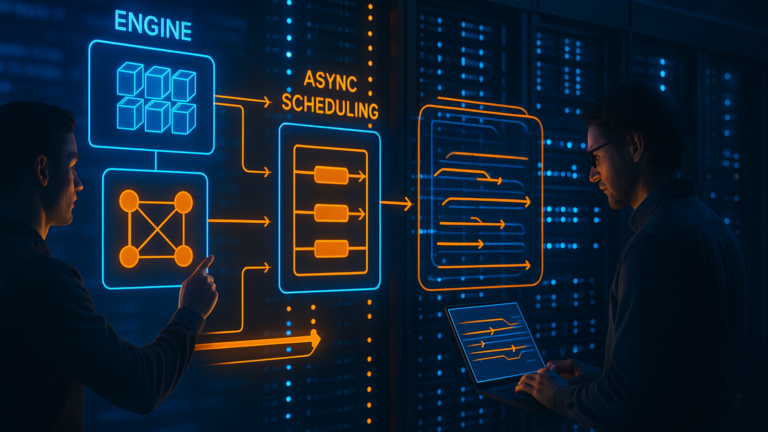
vLLM 0.16.0 lands with async scheduling and pipeline parallelism, a new WebSocket-based Realtime API, speculative decoding improvements, and major platform work—including an overhaul for XPU support. Here’s why those details matter to teams building reliable, cost-efficient inference stacks.
GitHub has made GPT-5.3-Codex generally available across Copilot tiers via the chat model picker on github.com, GitHub Mobile, and Visual Studio/VS Code. For enterprises, the key story is policy control and model choice — not just a new model name.
Dapr’s Conversation building block shows how cloud-native runtimes are turning LLM integrations into components. Instead of embedding provider SDKs everywhere, you declare OpenAI/Anthropic/Ollama configs as Dapr components and let the runtime handle auth, retries, and interface differences—similar to how Dapr standardized pub/sub and state.
Anthropic says Opus 4.6 improves agentic coding, computer use, tool use, search, and finance. For infrastructure teams, that combination points to a new kind of ops automation—if you build guardrails first.
Dapr’s Conversation component abstracts LLM provider differences behind a runtime API, letting teams focus on prompts and tool calls while the sidecar handles retries, auth, and provider quirks. It’s an early blueprint for agentic, ops-friendly AI integration.