Agentic AI is transforming software development in 2026. From multi-agent systems to frameworks like LangGraph and CrewAI, explore how autonomous agents are reshaping infrastructure, security, and the future of coding.
The AI landscape is shifting from passive models to autonomous agents. Discover how 2026's infrastructure developments—from Salesforce Headless 360 to SAP's 40+ ERP agents—are making production agentic AI a reality for software developers and enterprises.
From 30x throughput gains with NVIDIA Dynamo to trillion-parameter Llama 4 models running on single GPUs, discover the infrastructure innovations defining AI production in 2025.
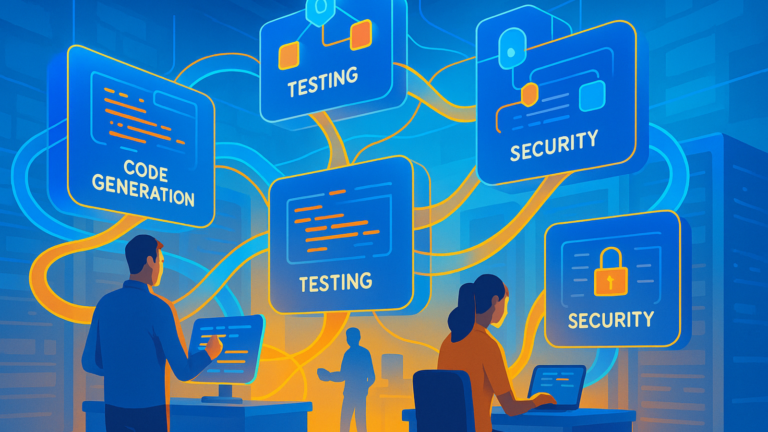
Agentic AI is reshaping software development in 2026. From LangGraph and CrewAI to Microsoft's new Agent Governance Toolkit, discover how autonomous agents are becoming production-ready teammates for infrastructure, security, and DevOps workflows.
Ten years after CNCF's founding, the ecosystem has grown to over 200 projects. From OpenTelemetry's declarative configuration milestone to Cilium's dominance in Kubernetes networking, here's what's shaping cloud native in 2026.
From agentic CI/CD to open observability standards, explore the pivotal developments defining modern DevOps practices in 2026, including Grafana 13, supply chain security mandates, and the rise of AI-augmented platform engineering.
The AI infrastructure landscape has undergone a seismic shift in 2026. From vLLM and TGI to NVIDIA Blackwell B200 and agentic systems, explore the technologies defining production-ready AI at scale.
A comprehensive guide to the agentic AI framework landscape in 2026. From LangGraph to CrewAI to OpenAI Agents SDK, we examine the trade-offs, use cases, and production considerations for building autonomous multi-agent systems.
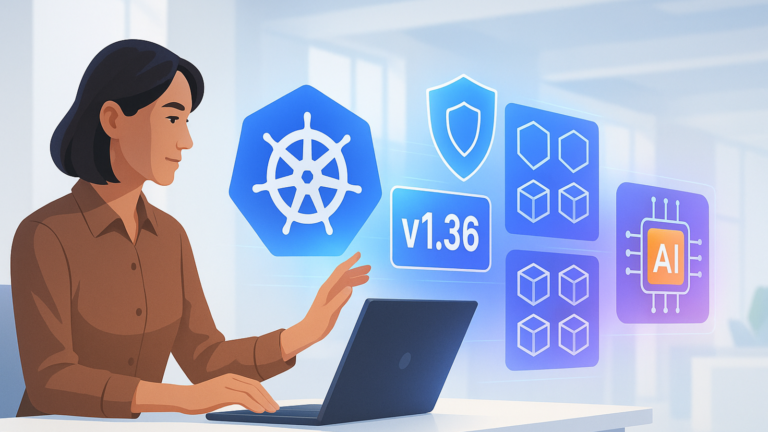
Kubernetes v1.36 brings 80 tracked enhancements including 18 stable features like user namespaces, mutating admission policies, and OCI VolumeSource. With security hardening, AI/ML workload improvements, and operational simplifications, this April 2026 release is a must-upgrade for platform engineering teams.
By end of 2026, 40% of enterprise applications will embed AI agents. Explore the multi-agent frameworks, A2A protocol, security challenges, and practical applications of agentic AI in software development.
Kubernetes 1.36 drops April 22 with 80 enhancements including stable user namespaces, OCI VolumeSource, and the retirement of Ingress NGINX. Plus: CNCF warns that Kubernetes alone isn't enough to secure LLM workloads.
The DevOps landscape in 2026 is transforming through agentic AI, platform engineering maturity, GitOps standardization, OpenTelemetry adoption, and supply chain security requirements. From AWS DevOps Agent to self-architecting systems, discover how these converging trends are reshaping software delivery.
The AI infrastructure landscape of 2026: vLLM dominates inference, AMD and TPUs challenge NVIDIA, vector databases mature for RAG, and AI observability becomes essential for production ML systems.
A practical guide to migrating from the deprecated ingress-nginx controller to Kubernetes Gateway API before the March 2026 retirement deadline.
How vLLM's PagedAttention innovation, multi-hardware support, and distributed parallelism strategies made it the dominant open-source LLM inference engine in 2026, delivering 2-4x throughput improvements.
A comprehensive comparison of the three dominant multi-agent AI frameworks—CrewAI, LangGraph, and AutoGen—helping enterprises choose the right foundation for their agentic AI systems in 2026.
When adding GPUs doesn't reduce latency, the problem isn't capacity—it's routing. Discover how llm-d's cache-aware scheduling delivers 57x faster TTFT and 2x throughput on the same hardware.
Financial services organizations are achieving 95% pipeline compliance and unified observability across hybrid platforms using CNCF graduated projects like OpenTelemetry, Prometheus, and Envoy. Discover how cloud native observability is transforming the industry.
Kubernetes 1.36 brings 22 security enhancements, ProtoMessage method removal, and production hardening aligned with NSA/CISA guidelines. Explore the security improvements, observability enhancements, and Nutanix NKP Metal's bare-metal Kubernetes capabilities.
At KubeCon EU 2026, Microsoft outlined how Istio's ambient mode could make service meshes effectively invisible to developers while maintaining enterprise-grade security and observability.