

Async Batching and the Rise of the Agentic GPU: AI Infrastructure in June 2026
From async batching to hardware diversification, AI infrastructure is being rebuilt for the inference era. Here is what builders need to know.
From async batching to hardware diversification, AI infrastructure is being rebuilt for the inference era. Here is what builders need to know.

The New AI Infrastructure Stack: How Hardware, Inference Engines, and Agent Tooling Are Converging for Enterprise Scale The Agentic Inflection Point AI infrastructure is undergoing its most significant transformation since the GPT-4 launch.

The AI infrastructure landscape of 2026: vLLM dominates inference, AMD and TPUs challenge NVIDIA, vector databases mature for RAG, and AI observability becomes essential for production ML systems.
The CNCF's new Kubernetes AI conformance program aims to solve portability and predictability challenges for AI workloads running on the 80% of enterprises already using Kubernetes.

The vLLM Korea Meetup 2026, held in Seoul on April 2nd, delivered more than just technical presentations—it offered a window into how AI inference infrastructure is…
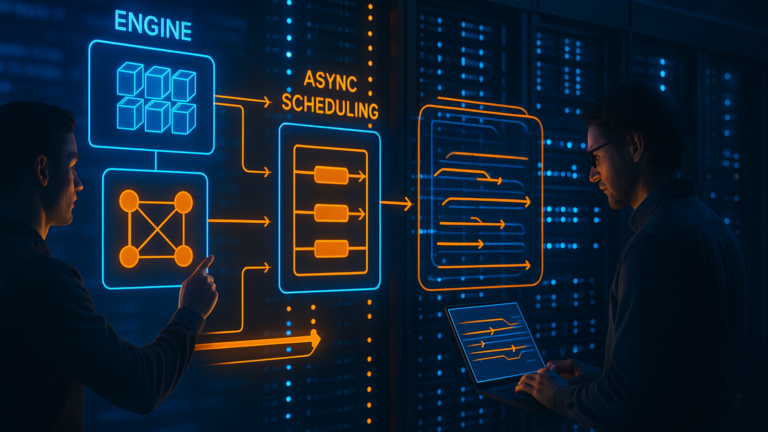
vLLM v0.19.0 brings full Google Gemma 4 architecture support, speculative decoding with zero-bubble async scheduling, and significant Model Runner V2 maturation for improved throughput and efficiency.
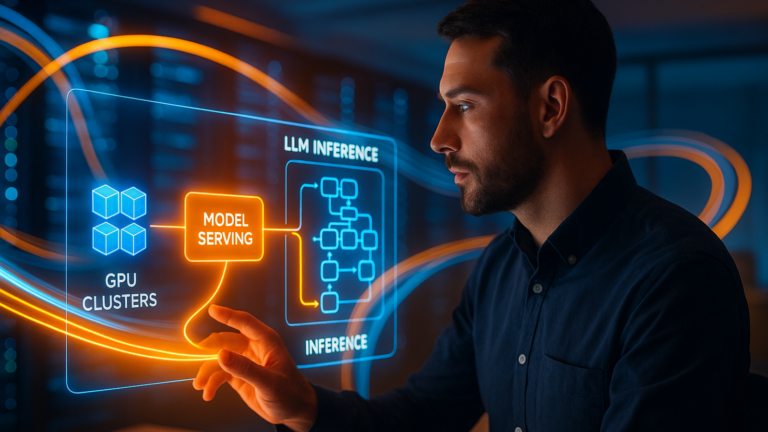
vLLM v0.19.0 ships with Google Gemma 4 support, zero-bubble async scheduling with speculative decoding, Model Runner V2 improvements, and contributions from 197 developers.
Kubernetes v1.30 brings Dynamic Resource Allocation to GA, improved Pod Security Standards, and enhanced memory QoS—key updates for platform engineering teams.

Production AI workloads increasingly rely on Kubernetes and cloud-native technologies for orchestration, GPU scheduling, and scalable infrastructure management.

Kubernetes 1.34 brings Dynamic Resource Allocation to GA, enabling proper GPU sharing, topology-aware scheduling, and gang scheduling for AI/ML workloads.

CNCF argues the AI stack is converging on Kubernetes—data pipelines, training, inference, and long-running agents. Here’s what’s actually driving the migration, the hidden operational tax it removes, and the platform-level standards teams should lock in before the next wave hits.

vLLM 0.16.0 lands with async scheduling and full pipeline parallelism support, plus speculative decoding improvements. Here’s how to think about throughput, tail latency, and operational rollout.

vLLM v0.16.0 ships with a large set of changes and a fast-moving contributor base. To adopt it safely, treat it like an API platform: validate OpenAI-compat endpoints, scheduling behavior, and observability before a fleet-wide cutover.

vLLM 0.16.0 lands with async scheduling and pipeline parallelism, a new WebSocket-based Realtime API, speculative decoding improvements, and major platform work—including an overhaul for XPU support. Here’s why those details matter to teams building reliable, cost-efficient inference stacks.

vLLM 0.16.0 landed with ROCm-focused fixes and ongoing production hardening. Even when a release looks incremental, inference runtimes are now platform-critical dependencies—affecting cost, reliability, and model portability.

vLLM 0.16.0 isn’t a routine release. It signals a shift toward higher-throughput, more interactive open model serving—plus the operational primitives (sync, pause/resume) teams need for RLHF and agentic workloads.

vLLM 0.16.0 ships major performance and platform changes—async scheduling with pipeline parallelism, a WebSocket-based Realtime API, and RLHF workflow improvements. Here’s how to interpret the release for production inference teams.

vLLM’s v0.16.0 release lands major throughput improvements plus a WebSocket Realtime API for streaming audio interactions. It’s a useful snapshot of where the open inference stack is going: more parallelism, more modalities, and more production ergonomics.

vLLM keeps becoming the default ‘high-throughput’ serving layer for open and frontier models. Here’s what the latest release notes signal about where inference ops is heading in 2026.

The ‘LLM inference server’ is quickly becoming a standard platform component. vLLM and Ollama represent two distinct operating models—GPU-first throughput engineering vs developer-friendly packaging. Here’s how to pick based on tenancy, observability, and cost, not hype.