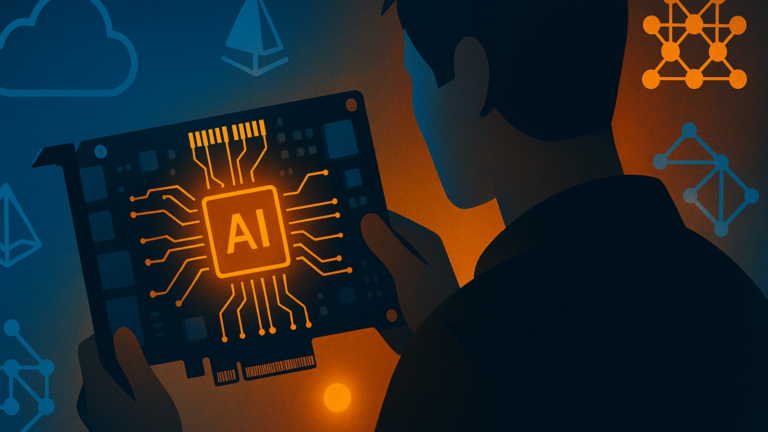
In 2026, the conversation around AI-assisted operations has shifted from writing better prompts to designing loops that run without human intervention. Here is how platform engineering and GitOps are converging to make that possible.
Kubernetes positions itself as the definitive operating system for AI data centers with 15.6 million cloud native developers and AI conformance standards expanding rapidly.
Kubernetes 1.36 drops April 22 with 80 enhancements including stable user namespaces, OCI VolumeSource, and the retirement of Ingress NGINX. Plus: CNCF warns that Kubernetes alone isn't enough to secure LLM workloads.
The DevOps landscape in 2026 is transforming through agentic AI, platform engineering maturity, GitOps standardization, OpenTelemetry adoption, and supply chain security requirements. From AWS DevOps Agent to self-architecting systems, discover how these converging trends are reshaping software delivery.
The CNCF's new Kubernetes AI conformance program aims to solve portability and predictability challenges for AI workloads running on the 80% of enterprises already using Kubernetes.
We’re experiencing an “everything changed” moment for IT operations and site reliability engineering. Driven by AI-assisted development, cloud adoption, and Kubernetes auto-scaling, infrastructure deployments are scaling…
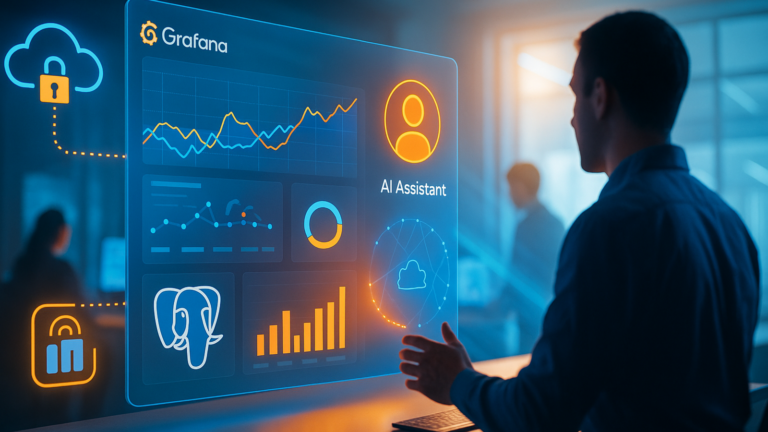
Learn how to connect private PostgreSQL databases to Grafana Cloud using Private Data Source Connect (PDC) and leverage the AI assistant to translate complex queries into visualizations without exposing data to the public internet.
Six key takeaways from Amsterdam show cloud-native has moved decisively from experimentation to execution - with AI workloads, data sovereignty, and platform engineering dominating the conversation.
vLLM v0.19.0 ships with Google Gemma 4 support, zero-bubble async scheduling with speculative decoding, Model Runner V2 improvements, and contributions from 197 developers.
Harbor Dragonfly ModelPack and ORAS projects collaborate on cloud-native ML artifact management.
Cloud-native infrastructure projects Harbor, Dragonfly, and ORAS unite to solve massive AI artifact distribution challenges.
The CNCF introduces ModelPack, an open standard for packaging and managing AI model artifacts in container registries, bridging the gap between ML pipelines and Kubernetes operations.
Kubescape 4.0 delivers enterprise-grade runtime threat detection GA, AI-native security features, and posture scanning for agentic workloads.
Higress joins CNCF Sandbox, offering unified Ingress Controller and AI gateway capabilities built on Envoy and Istio for enterprise workloads.
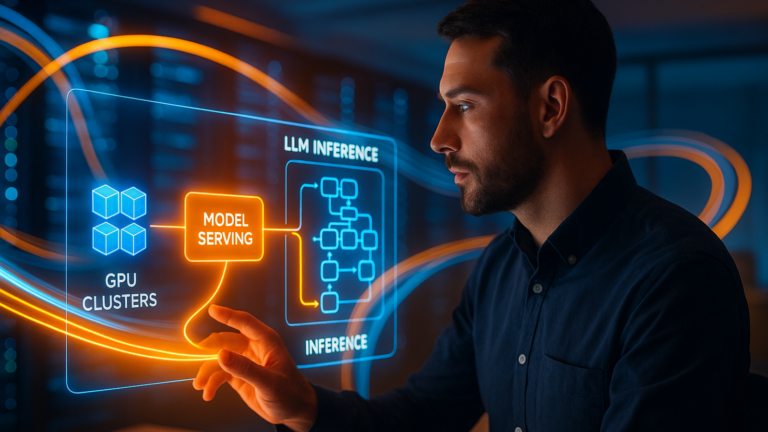
Production AI workloads increasingly rely on Kubernetes and cloud-native technologies for orchestration, GPU scheduling, and scalable infrastructure management.
Kubernetes 1.34 brings Dynamic Resource Allocation to GA, enabling proper GPU sharing, topology-aware scheduling, and gang scheduling for AI/ML workloads.
CNCF argues the AI stack is converging on Kubernetes—data pipelines, training, inference, and long-running agents. Here’s what’s actually driving the migration, the hidden operational tax it removes, and the platform-level standards teams should lock in before the next wave hits.
GitHub says GPT-5.4 is rolling out in Copilot, emphasizing agentic, tool-dependent workflows. The shift isn’t just better autocomplete—it’s a new integration surface (model policies, session controls, and agent execution environments) that enterprises will have to govern.
NVIDIA GTC 2026 (March 16–19, San Jose) is shaping up to be a full‑stack AI and accelerated computing week—from Jensen Huang’s keynote to hands‑on training, agentic AI sessions, and deep dives into inference, CUDA, and robotics. Here’s what to expect, who’s featured, and how to register.
Kubernetes 1.35 introduces an alpha ‘Restart All Containers’ capability that makes a whole‑Pod refresh a first‑class operation. Here’s where it helps, where it can hurt, and how to roll it out safely.