OpenAI reveals that 99.8% of internal AI usage is now agentic, with Codex users delegating tasks exceeding 8 hours. Meanwhile, custom silicon (Jalapeño), automated security patching (Daybreak), and sovereign agent platforms from Mistral and Cohere are reshaping the industry. The agentic era has arrived.
Agentic workloads are reshaping AI infrastructure. NVIDIA Dynamo targets KV cache efficiency, vLLM 0.14.0 ships async scheduling, OpenClaw launches SkillSpector, and LiteLLM adds cosign verification. Here is the state of inference security and MLOps.
DeepSeek-V4's million-token architecture, Holo3.1's local computer-use agents, and IBM's enterprise agent logic reveal how 2026's AI systems are engineered to act — not just answer.
From session-aware KV cache orchestration to agent-optimized CLIs, the infrastructure layer is racing to support long-running AI agents. NVIDIA Dynamo 1.0 enters production, vLLM and Ollama ship agent-relevant updates, and Hugging Face rebuilds its CLI for machine consumers.
Agentic AI is no longer a research curiosity. It is a production reality, and the infrastructure underneath it is evolving faster than most teams can track.…
The agentic AI conversation has shifted from hype to hard metrics. In May 2026, three threads dominate: Google is shipping agent-first developer platforms, the open-source community is building rigorous benchmarks, and enterprise vendors are consolidating around sovereign AI stacks.
The rise of agentic AI is reshaping how we think about automation, assistants, and even software itself. What started as chat-based interaction has quickly evolved into…
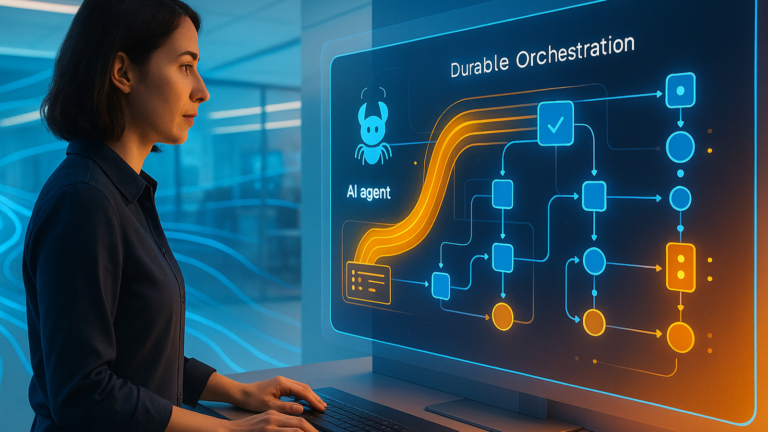
OpenClaw 2026.4.2 restores the Task Flow substrate with managed-vs-mirrored sync modes, durable flow state tracking, and inspection/recovery primitives for reliable background orchestration.
OpenClaw's March 2026 release removes nodes.run, hardens plugin security, and restructures background tasks into a proper control plane.
OpenClaw 2026.3.24 introduces OpenAI API emulation for seamless integration with existing toolchains.
Learn how to configure and use Model Context Protocol (MCP) servers to extend OpenClaw's capabilities with external tools and APIs.
Ollama now ships with web search/fetch plugins for OpenClaw and introduces headless mode for CI/CD and automation workflows.
OpenClaw v2026.3.13-beta.1 adds Chrome DevTools MCP support for signed-in sessions and new profile options for browser automation.
Ollama v0.18.1+ brings web search and fetch plugins to OpenClaw, letting local models access current information without JavaScript execution.
OpenClaw 2026.3.13 introduces official Chrome DevTools MCP attach mode for debugging live browser sessions directly from your AI agent.
Ollama 0.18 brings official OpenClaw provider support, up to 2x faster Kimi-K2.5 performance, and the new Nemotron-3-Super model designed for high-performance agentic reasoning tasks.
NVIDIA’s newly announced NemoClaw signals a serious attempt to turn AI agents into enterprise infrastructure. For OpenClaw, that likely means stronger competition for enterprise mindshare — but also validation that the agent runtime itself is becoming a strategic platform layer.
A practical, ops-friendly guide to running multiple OpenClaw agents safely: isolate sessions, schedule cron jobs, route delivery (WhatsApp/webchat), and add guardrails so automation stays predictable.
OpenClaw’s 2026.3.8 release leans hard into operational maturity: first-class backup + verification for local state, optional ACP provenance receipts for traceability, and a raft of reliability fixes across cron delivery, browser relay, and cross-channel routing.
OpenClaw’s 2026.3.2 release leans into enterprise ops: broader SecretRef coverage, faster failure on unresolved refs, and a first-class PDF tool. Meanwhile llama.cpp continues its rapid perf work with new AArch64 SME compute paths.