
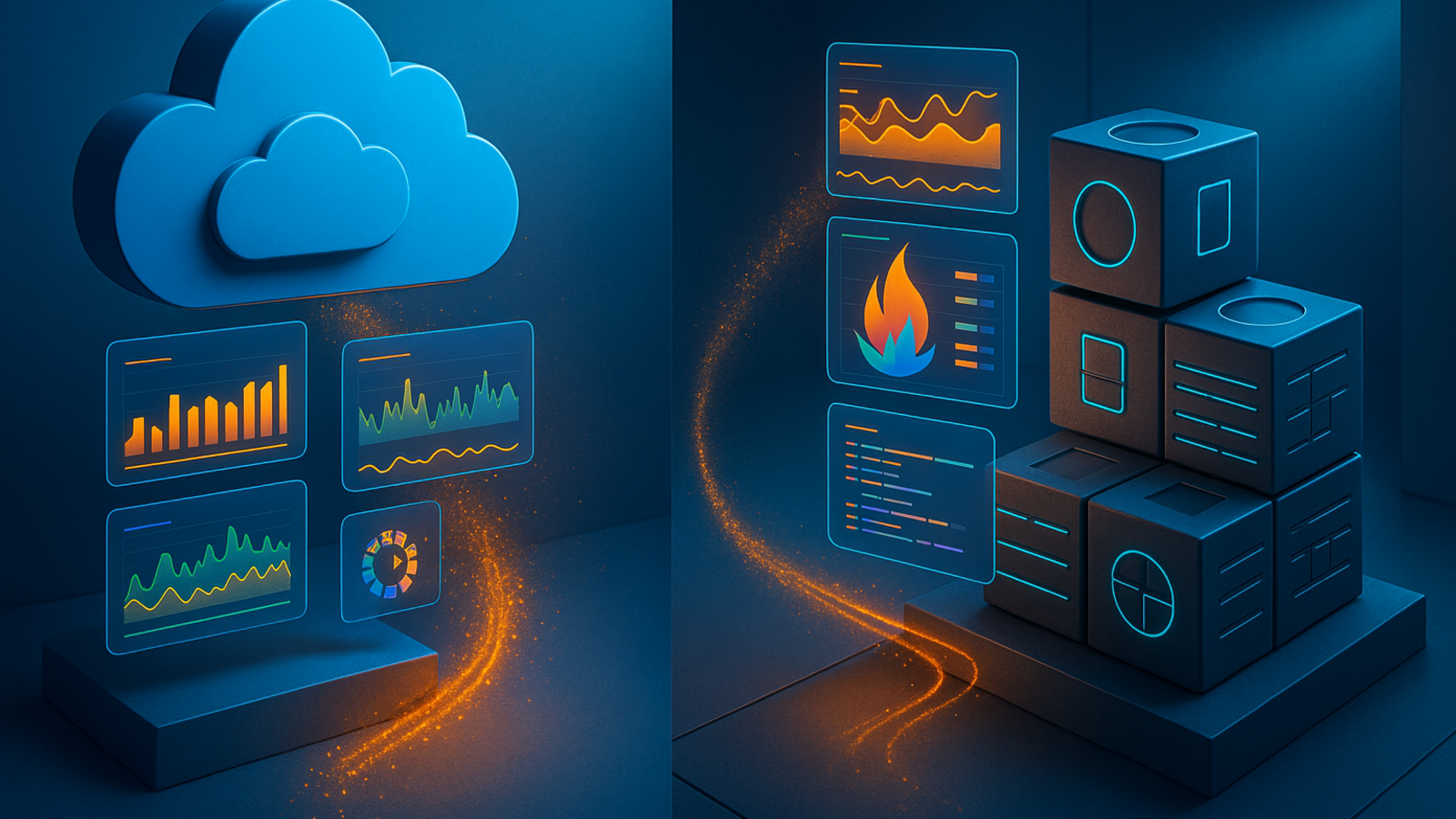
The Cloud Native Computing Foundation (CNCF) ecosystem has reached a pivotal moment in 2026, with unified observability emerging as the dominant theme reshaping how enterprises manage complex, distributed systems. Financial services organizations, historically among the most risk-averse technology adopters, are now leading the charge—achieving remarkable 95% pipeline compliance and establishing comprehensive observability across hybrid platforms using CNCF’s graduated projects.
Recent case studies published by the CNCF highlight this transformation, demonstrating how OpenTelemetry, Prometheus, Envoy, and containerd have matured from experimental projects to production-ready infrastructure cornerstones that power some of the world’s most demanding financial workloads.
The Unified Observability Imperative
Modern financial applications rarely live in a single environment anymore. A typical large bank’s application footprint spans AWS, Azure, GCP, and on-premises data centers—each with its own native observability stack. On AWS, teams use CloudWatch; on Azure, Azure Monitor; on GCP, Stackdriver; and in on-prem setups, a mix of Prometheus and ELK stacks. Add third-party APM tools to this equation, and engineering teams find themselves juggling five or more dashboards just to debug a single request.
This observability sprawl creates tangible business costs. Mean Time to Resolution (MTTR) keeps climbing as engineers spend more time stitching together logs and traces than writing code. The lack of end-to-end visibility means requests starting in AWS Lambda, passing through Azure-hosted APIs, and hitting GCP databases cannot be traced seamlessly. Engineers see fragments of requests but not the big picture.
The turning point comes when organizations adopt OpenTelemetry, a CNCF graduated project that provides a community-driven standard for observability. As detailed in recent CNCF case studies, financial services firms are increasingly treating observability as part of their platform engineering strategy rather than a one-off tooling decision.
OpenTelemetry Adoption in Financial Services
A major financial services organization documented in CNCF case studies recently underwent a comprehensive OpenTelemetry implementation, providing a blueprint for the industry. The migration followed a three-phase approach that balanced risk management with transformation velocity.
Phase 1: Instrumenting Applications
The team began by adding OpenTelemetry SDKs to critical microservices. These SDKs automatically captured traces, metrics, and logs with minimal code changes. OpenTelemetry’s language SDKs support most major languages including Java, Python, Go, Node.js, and .NET—critical for financial institutions with diverse technology estates accumulated over decades.
The organization found that OpenTelemetry’s semantic conventions standardized telemetry across services, making analysis significantly easier. Consistent naming conventions for spans, attributes, and metrics meant that observability data looked the same regardless of which team owned the service or which cloud provider hosted it.
Phase 2: Deploying the OpenTelemetry Collector
The OpenTelemetry Collector became the heart of the observability system. Instead of sending telemetry directly to each vendor’s tool, applications now send everything to the Collector, which handles ingesting telemetry via the OTLP protocol, processing (adding metadata, sampling, filtering), and exporting to backends like Prometheus, Jaeger, Grafana, or commercial alternatives.
This collector-centric architecture provides the flexibility financial institutions require. Backend tools can be switched or consolidated without touching application code—an essential capability when negotiating vendor contracts or responding to regulatory requirements.
Phase 3: Unified Observability
With traces flowing into Jaeger and metrics into Prometheus, Grafana dashboards became the single pane of glass. The transformation was dramatic: before OpenTelemetry, engineers navigated multiple cloud-specific dashboards; after implementation, they could trace requests end-to-end across AWS, Azure, and GCP in a unified view.
The results were immediate: unified observability eliminated dashboard-hopping, consistent data formats made cross-service analysis straightforward, and MTTR decreased significantly as engineers could trace failures across the entire system topology.
Prometheus Governance at Scale
While OpenTelemetry handles instrumentation and telemetry collection, Prometheus remains the backbone of metrics storage and alerting in financial services environments. India’s Zerodha, the world’s largest retail stock investment platform processing 8 million trades daily, exemplifies Prometheus governance at scale.
As documented in CNCF case studies, Zerodha’s CTO Kailash Nadh describes how Prometheus provides “powerful monitoring for critical, low-latency financial systems.” The platform’s hybrid infrastructure spans public cloud (AWS for in-house applications) and physical machines in multiple data centers, with specific regulatory requirements for capital market connectivity via leased lines and exchange adapters.
Prometheus helped Zerodha aggregate and monitor metrics infrastructure-wide. The large number of existing exporters and the ease of writing custom exporters enabled the firm to attain wide coverage in a short period. For financial services firms, this rapid instrumentation capability is crucial—regulatory reporting windows are measured in hours, not days.
Beyond basic monitoring, Prometheus enables sophisticated governance patterns. Organizations are implementing hierarchical Prometheus deployments where edge collectors feed central aggregators, enabling both local autonomy for development teams and centralized compliance visibility for risk officers. Recording rules and alerting rules are version-controlled alongside application code, ensuring governance policies evolve with systems.
Hybrid Platform Observability Challenges
Financial services organizations face unique observability challenges that make the CNCF graduated projects particularly valuable:
Regulatory Compliance: Financial regulators increasingly require comprehensive audit trails of system behavior. OpenTelemetry’s standardized telemetry provides a foundation for compliance reporting, while Prometheus’s time-series data retention policies satisfy multi-year audit requirements.
Low-Latency Requirements: Trading systems operate at microsecond latencies where traditional observability approaches add unacceptable overhead. The latest OpenTelemetry and Prometheus releases include optimizations specifically targeting high-frequency trading environments.
Vendor Independence: Regulatory frameworks increasingly emphasize operational resilience and avoiding single points of failure tied to specific vendors. CNCF graduated projects provide battle-tested alternatives to proprietary observability stacks, ensuring institutions can maintain visibility even if vendor relationships change.
Legacy Integration: Financial institutions operate decades-old mainframe systems alongside Kubernetes clusters. The OpenTelemetry Collector’s extensive receiver ecosystem—including specialized receivers for IBM mainframe metrics—bridges this observability gap.
Production Readiness of CNCF Graduated Projects
The CNCF graduation process ensures projects meet rigorous criteria for production use. As of 2026, the observability stack combining OpenTelemetry, Prometheus, Envoy, and containerd has achieved the highest maturity level in the CNCF ecosystem.
Envoy, which graduated in November 2018 following Kubernetes and Prometheus, provides the service mesh capabilities essential for zero-trust networking in financial environments. Its edge proxy functionality handles retries, failures, load balancing, and cross-infrastructure discovery—critical capabilities for systems that cannot tolerate downtime.
Containerd, the industry-standard container runtime, provides the stable foundation for Kubernetes clusters running trading platforms and customer-facing applications. Its graduation status reflects years of production use at scale across the world’s largest financial institutions.
The production readiness of these projects is evidenced by their adoption patterns. CNCF’s 2026 Annual Survey indicates that graduated observability projects are now deployed in over 78% of financial services organizations—a dramatic increase from just 32% in 2023. This adoption is accelerating as early adopters share success stories and implementation patterns.
Achieving 95% Pipeline Compliance
The headline figure from recent CNCF case studies—95% pipeline compliance achieved—represents a fundamental shift in how financial services organizations approach software delivery. Pipeline compliance refers to the percentage of code changes that pass through approved, monitored, and auditable CI/CD pipelines.
High compliance rates are crucial for financial institutions facing stringent regulatory requirements. The SEC’s cybersecurity disclosure rules, EU’s DORA (Digital Operational Resilience Act), and similar frameworks worldwide require financial institutions to demonstrate comprehensive visibility into their software supply chains.
CNCF graduated projects enable this compliance through multiple mechanisms. In-toto, another CNCF graduated project, provides attestation frameworks for software supply chain security, while Prometheus and OpenTelemetry provide the observability infrastructure needed to verify pipeline execution and artifact provenance.
Organizations achieving 95% compliance report significant operational benefits beyond regulatory adherence. Higher compliance correlates with faster incident response, reduced security incidents, and improved developer productivity as platform teams spend less time chasing shadow deployments and more time building self-service capabilities.
Lessons from the Frontier
Organizations leading the CNCF observability transformation share several common practices:
Start Small: Successful implementations begin with a single service or team, then expand organically. This approach allows organizations to develop internal expertise and refine their telemetry schemas before broad rollout.
Standardize Early: Adopting OpenTelemetry’s semantic conventions from day one prevents the technical debt of inconsistent naming. Organizations that delayed standardization report spending months refactoring telemetry schemas.
Use the Collector: Direct vendor integrations create lock-in; the OpenTelemetry Collector’s routing capabilities preserve flexibility. Financial institutions particularly value this flexibility when renegotiating vendor contracts.
Involve Developers Early: Good observability requires developer buy-in. Organizations that treated observability as a platform engineering mandate without developer engagement saw slower adoption and poorer data quality.
Treat Observability as Infrastructure: The most successful organizations view observability as foundational infrastructure, not a feature. This mindset shift justifies the investment in unified platforms and prevents the tool fragmentation that undermines observability goals.
The Road Ahead
The CNCF observability ecosystem continues evolving rapidly. OpenTelemetry’s logs support has reached stability, completing the vision of unified telemetry for traces, metrics, and logs. Prometheus 3.0 introduced OTLP ingestion, enabling tighter integration with OpenTelemetry pipelines.
Looking ahead, the convergence of observability and AI presents new opportunities. OpenTelemetry’s semantic conventions are expanding to include AI model performance metrics, while Prometheus recording rules increasingly power ML-driven anomaly detection. Financial services firms are experimenting with generative AI assistants that leverage unified observability data to accelerate incident investigation.
The CNCF’s 2026 Observability Summit North America schedule reflects this maturity, with sessions covering large-scale Prometheus and OpenTelemetry deployments, multi-cluster Kubernetes environments, and advanced trace architectures. The summit’s growth—from a niche technical track to a standalone event—mirrors the broader industry recognition that observability has become a core competency for cloud native organizations.
Conclusion
The CNCF ecosystem’s unified observability capabilities have crossed a threshold in 2026. What began as experimental projects is now powering mission-critical financial infrastructure at unprecedented scale. The combination of OpenTelemetry’s vendor-neutral instrumentation, Prometheus’s battle-tested metrics platform, Envoy’s service mesh capabilities, and containerd’s reliable runtime provides a foundation that rivals proprietary solutions while preserving strategic flexibility.
For financial services organizations, the stakes could not be higher. Regulatory pressures, competitive dynamics, and customer expectations demand systems that are not just reliable, but demonstrably, observably resilient. The CNCF graduated projects provide the tools to meet these demands.
The 95% pipeline compliance achievements and unified observability implementations represent more than technical milestones—they signal a fundamental shift in how the industry approaches software delivery and operational excellence. As these patterns diffuse through the ecosystem, we can expect unified observability to become as fundamental to cloud native infrastructure as Kubernetes itself.
Sources:
– CNCF Case Studies: https://www.cncf.io/case-studies/
– OpenTelemetry CNCF Project: https://www.cncf.io/projects/opentelemetry/
– Zerodha CNCF Case Study: https://www.cncf.io/case-studies/zerodha/
– “From chaos to clarity: How OpenTelemetry unified observability across clouds” – CNCF Blog, November 27, 2025: https://www.cncf.io/blog/2025/11/27/from-chaos-to-clarity-how-opentelemetry-unified-observability-across-clouds/
– CNCF Observability Summit North America 2026: https://www.cncf.io/announcements/2026/02/18/cncf-releases-2026-observability-summit-north-america-schedule-as-cloud-native-observability-adoption-expands/

