
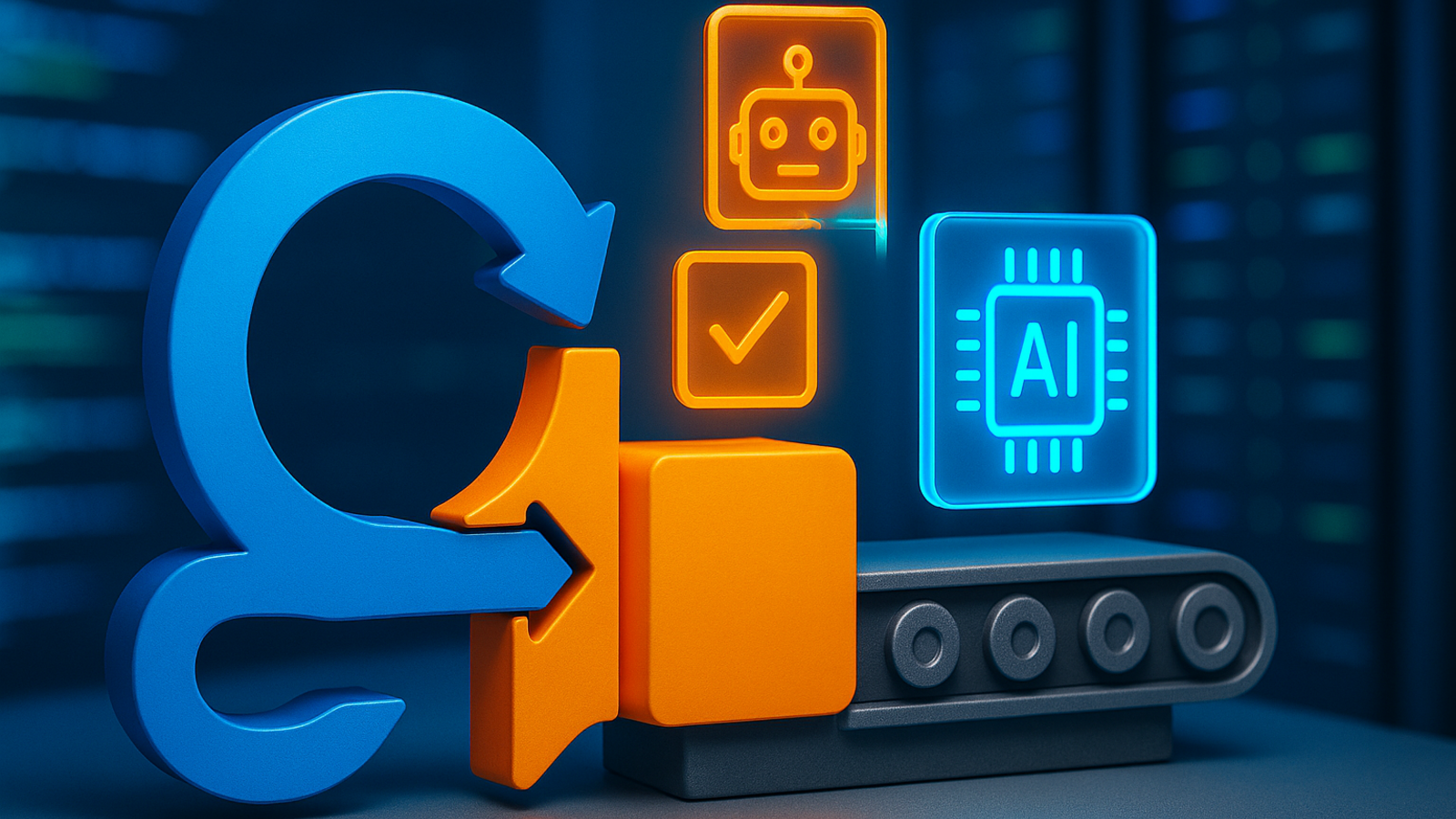
The DevOps landscape in mid-2026 is being reshaped by a single, powerful force: AI coding agents that write code faster than teams can validate it. The traditional model of "write code → push → wait for CI → fix" is breaking down under the volume and velocity of agent-generated changes. This week, CircleCI, GitHub, and the broader GitOps ecosystem all released updates that point to the same conclusion — the future of DevOps is not just automating pipelines, but embedding validation directly into the agent workflow.
What is emerging is a new layer in the platform engineering stack: the agent validation layer. It sits between the AI coding agent and the traditional CI/CD pipeline, providing sub-second feedback loops that keep agents productive while protecting code quality. This layer is not a replacement for CI/CD — it is a prerequisite for it.

The Agent-CI Gap Is Now the Critical Bottleneck
AI coding agents like OpenAI Codex, Claude Code, and GitHub Copilot have moved from novelty to daily workflow. But they share a common flaw: they generate code in isolation from the systems that must validate it. A function that looks correct in the editor can still break downstream integrations, fail lint rules, or introduce regressions that only surface under real test conditions. Without a validation step between the agent and CI, every problem gets caught after the push — and feedback arrives long after the agent has lost context.
CircleCI’s answer to this problem is Chunk sidecars and microbuilds, which the company detailed in two posts this week. Chunk sidecars are lightweight validation environments that fire automatically when an AI agent pauses, testing changes in seconds inside a microVM that mirrors CI. The agent gets immediate feedback, fixes failures on the spot, and only then commits code that is already green.
The workflow is intentionally lightweight. After installing the Chunk CLI and running chunk init, the tool detects the project stack — whether it is npm with Jest, Python with pytest, or another common combination — registers the appropriate test command, and installs a hook into Claude Code. When the agent finishes a response, validation runs automatically on a secure Linux microVM in the developer’s CircleCI account. No git commit, push, or pull request is required. The remote tree mirrors the local one on demand, and a complete test cycle completes in roughly one second once the microVM is warmed up.
This matters because it shifts validation left in a way that actually matches how agents work. Traditional pre-commit hooks and local test suites require the developer to remember to run them. Agent-driven microbuilds run automatically, every time, and feed results directly back into the agent’s context window. The agent can then iterate — edit, re-sync, re-validate — without ever leaving the terminal. The loop is fast enough that agents can fix failures while the code generation context is still fresh, which dramatically reduces the number of broken commits that reach the shared repository.
CircleCI also launched a Codex plugin that extends this integration further. Codex users can now query pipeline status, validate .circleci/config.yml before pushing, trigger pipelines from the terminal, and even hand off larger maintenance tasks to Chunk — CircleCI’s autonomous CI agent that runs inside CircleCI’s infrastructure, reads the repo, makes changes, validates them, and opens a PR when the pipeline passes. For teams managing multiple AI tools, CircleCI also offers an MCP server that exposes the same capabilities to Cursor, Claude Code, and Windsurf.
GitHub Pushes Programmatic Quality Controls
While CircleCI is rethinking how validation happens during development, GitHub is making it easier to enforce quality standards at scale across organizations.
This week GitHub announced a Repository Enablement API for Code Quality, now in public preview. The new endpoints allow teams to programmatically enable and configure GitHub Code Quality on individual repositories:
PATCH /repos/{owner}/{repo}/code-quality/setup— enable or disable Code Quality default setup, configure languages to analyze, and specify the runner type.GET /repos/{owner}/{repo}/code-quality/setup— retrieve current configuration including state, languages, runner type, and analysis schedule.
Supported languages cover the major enterprise stacks: C#, Go, Java/Kotlin, JavaScript/TypeScript, Python, and Ruby. This is a significant step for platform engineering teams that need to roll out code quality gates across hundreds of repositories without manual clicking through settings pages.
The release follows a broader trend: GitHub is treating code quality as infrastructure that should be provisioned and managed like any other platform service. For organizations running internal developer platforms, this API means code quality can be automatically enabled on new repositories via platform provisioning workflows, with configuration drift managed through the same GitOps pipelines that handle the rest of the infrastructure.
GitHub also expanded Dependabot support this week, adding the sbt (Scala Build Tool) ecosystem for version updates. While this is a narrower feature, it signals GitHub’s continued investment in supply chain security automation across increasingly diverse language ecosystems — a theme that matters to platform teams managing polyglot environments.
Terraform Matures: ARM64, Deprecations, and Backend Validation
The infrastructure-as-code layer is also seeing meaningful evolution. HashiCorp released Terraform 1.15.4 this week, capping a busy May for the project that also saw the 1.16.0 alpha release.
The 1.15.x series introduced several enterprise-relevant features:
- Windows ARM64 builds — expanding platform coverage for organizations running ARM-based Windows environments.
- Deprecated attributes on variables and outputs — teams can now mark inputs and outputs as deprecated, producing warnings when they are referenced. This is a subtle but important quality-of-life improvement for module maintainers managing breaking changes across large codebases.
- S3 backend authentication via
aws login— simplifying credential management for teams using AWS SSO and Identity Center. - Backend validation in
terraform validate— the validate command now checks backend blocks for correctness, catching misconfigurations before they surface during apply.
Meanwhile, the 1.16.0 alpha previewed deeper capabilities: a new store block in terraform_data that handles ephemeral and sensitive values, nested computed blocks for providers, and experimental deferred actions support that allows count and for_each arguments to have unknown values during planning.
For platform engineers, the steady cadence of Terraform releases reinforces its position as the default provisioning layer — but also highlights the ongoing complexity of managing state, backends, and provider lifecycles at scale.
GitOps at Scale: Lessons from the Flux Ecosystem
The GitOps community continues to mature its tooling for large-scale Kubernetes deployments. A recent FluxCD blog post detailed Morgan Stanley’s five-year journey from push-based pipelines to a self-service GitOps platform managing over 500 clusters — a case study that validates the core principles of Flux (Lean, Performant, Extensible, Secure) at enterprise scale.
Their key lessons echo what many platform teams are learning:
- Configuration drift is inevitable without continuous reconciliation. Push-based pipelines leave clusters in unknown states after manual changes or failed deployments.
- Fragile recovery becomes a crisis at scale. Cluster rebuilds requiring heavy coordination between platform and application teams are unsustainable.
- GitOps decouples delivery from the pipeline. By making Git the single source of truth and letting an agent (Flux) continuously reconcile, recovery becomes a matter of reapplying known state rather than manual redeployment.
Separately, the Flux community released a new Terraform bootstrap module that solves a long-standing architectural tension: how to install Flux via Terraform without trapping Terraform into perpetual ownership of Flux-managed resources. The module bootstraps Flux Operator through a Kubernetes Job, then hands off steady-state reconciliation to Flux itself. Terraform shows zero diff on subsequent plans when inputs are unchanged — a clean separation of bootstrap and reconciliation concerns.
Observability Meets AI Workloads
Finally, Dynatrace this week expanded its enterprise observability story through a partnership with Dell Technologies AI Ecosystem Program. As enterprises move AI workloads from pilot to production, traditional monitoring tools are proving inadequate for the unique failure modes of AI pipelines: GPU cost spirals, LLM latency fluctuations, multi-step agent chain failures, and model drift.
Dynatrace’s positioning is straightforward — unified AI observability covering prompts, model calls, and downstream services in a single platform, with distributed tracing across multi-step agent chains and built-in governance capabilities designed for regulated industries.
For DevOps teams, this reflects a broader pattern: the observability stack is being retooled for AI-native architectures, just as the CI/CD stack is being retooled for AI-native development workflows.
What This Means for Platform Engineering
The common thread across all these releases is adaptation. DevOps and platform engineering tools are evolving to support a world where AI agents are first-class participants in the software lifecycle — not just as tools developers use, but as actors that generate code, trigger pipelines, and require feedback loops measured in seconds rather than minutes.
For platform teams, the implications are clear:
- Validation must move closer to the agent. Waiting for post-push CI feedback is too slow when agents generate code continuously.
- Quality gates must be programmable. Manual configuration does not scale across hundreds of repositories and thousands of developers.
- GitOps remains the steady-state answer. Continuous reconciliation, not push-based delivery, is the only model that works at scale.
- Observability must cover AI-native failure modes. Traditional metrics miss the behaviors that matter in agentic and LLM-based systems.
The DevOps toolchain of 2026 is being rebuilt around AI-augmented workflows. The teams that adapt their platforms to this reality first will have a significant advantage in developer velocity, code quality, and operational reliability.
Sources
- CircleCI — Run your first microbuild in 5 minutes
- CircleCI — Getting started with Codex and CircleCI
- GitHub Changelog — GitHub Code Quality: Repository Enablement API
- GitHub Changelog — Dependabot version updates now support the sbt ecosystem
- HashiCorp Terraform v1.15.4 Release Notes
- HashiCorp Terraform v1.16.0-alpha Release Notes
- FluxCD — Bootstrapping Flux with Terraform, the right way
- FluxCD — Stairway to GitOps: Scaling Flux at Morgan Stanley
- Dynatrace — Scaling enterprise AI with confidence

