

AI
Mistral’s GLM 5.2 Deprecation Tests Hosted Open-Model Portability
Mistral’s rapid move from hosted GLM 5.2 to 5.3 shows why open weights need internal model contracts, trajectory-level evals, and tested fallbacks.
Mistral’s rapid move from hosted GLM 5.2 to 5.3 shows why open weights need internal model contracts, trajectory-level evals, and tested fallbacks.

GPT-6.1 Sol pairs the flagship’s long-context and agent interface with sharply lower token rates, shifting the production default toward a policy-driven middle tier.

Official model catalogs now point to a portfolio era for LLMs, where teams route work across tiers for reasoning, speed, voice, code, and governance.

Claude Fable 5.1 and Anthropic's million-token model lineup show why long-context agentic systems need routing, budgets, and workflow-specific evals.

OpenAI’s GPT-6 Astra launch is best understood as an enterprise infrastructure move: a premium model tier built for long-context, tool-connected, end-to-end agentic work.
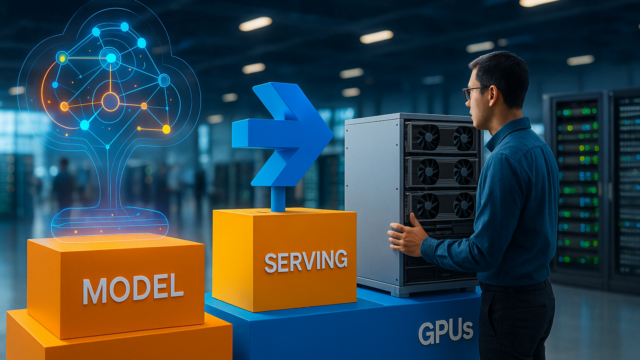
Granite 4.2, quantization-aware healing, and vLLM 0.28.0 show the LLM market moving toward operational efficiency, not model size alone.

Google released Gemini 3.7 Flash with half-price API tokens through year-end, targeting coding and agentic workflows. The real story isn't just benchmarks — it's about cost per completed task.

OpenAI previewed GPT-5.6 Sol with ultra mode subagent orchestration, new benchmarks, and a government-coordinated phased release. The launch highlights how frontier AI capability and governance are now inseparable.

Agentic AI stopped being a prototype this week. OpenAI shipped enterprise phone-support agents. Meta released a 30B-parameter local model. Google expanded managed agents with hooks and budget controls. And an AI agent autonomously chained zero-day exploits to compromise Hugging Face infrastructure. A field report from the front lines.

OpenAI, Anthropic, Google, xAI, Meta, Moonshot, and Alibaba shipped new frontier models between July 9 and August 2. Here is what each one does, how they compare, and why open weights are changing the game.

In eight weeks, every major AI lab shipped a new flagship. OpenAI launched GPT-5.6 Sol/Terra/Luna, Anthropic debuted Claude Fable 5, xAI released Grok 4.5, and DeepSeek dropped V4 pricing that undercuts everyone. Here's the practical guide to picking the right model.

OpenAI's GPT-5.6, Anthropic's Claude Fable 5, and a wave of competitive open-weight models have redefined the LLM landscape in mid-2026. Here's what developers need to know.

In just two weeks, a wave of major announcements from OpenAI, Google, Anthropic, Databricks, Mistral, and OpenClaw have converged on a single thesis: the future of AI is not conversation—it is autonomous, multi-step, tool-using agents that execute workflows. This article surveys the most significant developments, what separates real agents from chat interfaces, and the infrastructure, safety, and governance challenges ahead.
