

CNCF Tackles Model Weight Distribution for AI at Scale
Cloud-native infrastructure projects Harbor, Dragonfly, and ORAS unite to solve massive AI artifact distribution challenges.
Cloud-native infrastructure projects Harbor, Dragonfly, and ORAS unite to solve massive AI artifact distribution challenges.

Argo Rollouts graduates to General Availability, bringing stable APIs and production-ready progressive delivery capabilities for Kubernetes deployments.

The CNCF introduces ModelPack, an open standard for packaging and managing AI model artifacts in container registries, bridging the gap between ML pipelines and Kubernetes operations.

Kubescape 4.0 delivers enterprise-grade runtime threat detection GA, AI-native security features, and posture scanning for agentic workloads.

F5 upgrades to CNCF Gold Membership, strengthening collaboration on OpenTelemetry, Gateway API, and secure cloud-native networking infrastructure.

Higress joins CNCF Sandbox, offering unified Ingress Controller and AI gateway capabilities built on Envoy and Istio for enterprise workloads.

Production AI workloads increasingly rely on Kubernetes and cloud-native technologies for orchestration, GPU scheduling, and scalable infrastructure management.

The Cloud Native Computing Foundation has unveiled the CARE Program (Certification Advancement & Recertification Experience), a significant restructuring of its certification renewal policy that addresses long-standing…

Platform Engineering Day’s growing emphasis on AI, security, and internal platform maturity is a useful signal: cloud-native teams are moving past raw infrastructure enthusiasm and toward the harder work of building governed, product-like platforms for developers and automation.

The KubeCon + CloudNativeCon India 2026 schedule is less interesting as an event announcement than as a demand signal. AI + ML, observability, operations, platform engineering, and security are showing up together because teams no longer get to treat them as separate tracks in production.

Collector-contrib v0.146.0 brings OTTL context inference to the Filter Processor, reducing config footguns and making filtering rules more readable. Here’s what changes for platform teams running OTel at scale.
The OpenTelemetry project says key parts of its declarative configuration spec are now stable, including the data model schema and YAML representation. That’s a quiet milestone with big implications: versionable config, safer rollout patterns, and vendor-neutral ‘observability as code.’

CNCF argues the AI stack is converging on Kubernetes—data pipelines, training, inference, and long-running agents. Here’s what’s actually driving the migration, the hidden operational tax it removes, and the platform-level standards teams should lock in before the next wave hits.
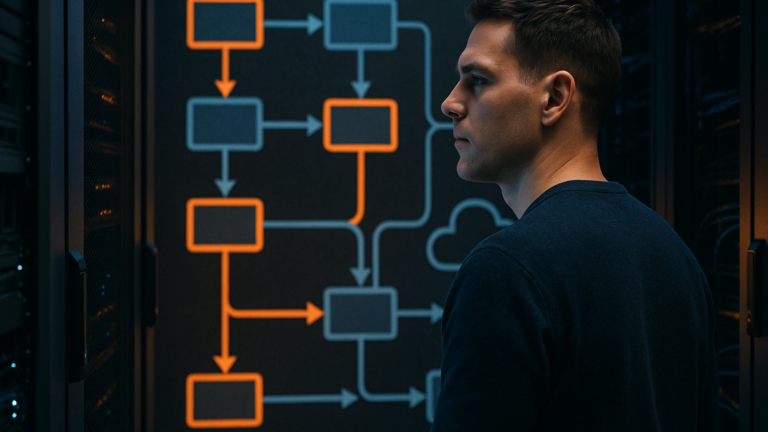
Collector-contrib v0.146.0 adds context inference to the Filter Processor, letting teams write readable, intent-first OTTL conditions instead of juggling internal contexts. Here’s what changes, how evaluation works, and how to adopt it safely.

Flux 2.8 goes GA with Helm v4 support, server-side apply defaults, kstatus health checks, and new features aimed directly at reducing MTTR in GitOps workflows.

OpenTelemetry’s eBPF Instrumentation project shipped its first alpha release. Here’s what you gain (and what you still don’t) when you shift observability left—down into the kernel.
OpenTelemetry’s eBPF instrumentation (OBI) is now shipping an initial release, pushing the ecosystem toward low-friction, kernel-level telemetry—especially for large fleets where manual instrumentation doesn’t scale. Here’s what eBPF-based signals are good for, where they’re risky, and how to roll them out safely in production.

Flux 2.8 lands Helm v4 support (SSA + kstatus health checks), reduces MTTR by canceling health checks when new revisions appear, and expands GitOps feedback loops with PR/MR comment providers and a new Flux Operator Web UI.

OpenTelemetry’s eBPF Instrumentation project (OBI) just hit its first release. That’s a milestone for low-overhead, zero-code observability—but it also raises new questions about privilege, fleet rollout, and data governance.
CNCF is spotlighting Agentics Day at KubeCon EU 2026 with a focus on MCP and production-grade agents. The real story: interoperability layers are becoming infrastructure. Here’s how to think about MCP as platform plumbing—and how to operate it safely.