
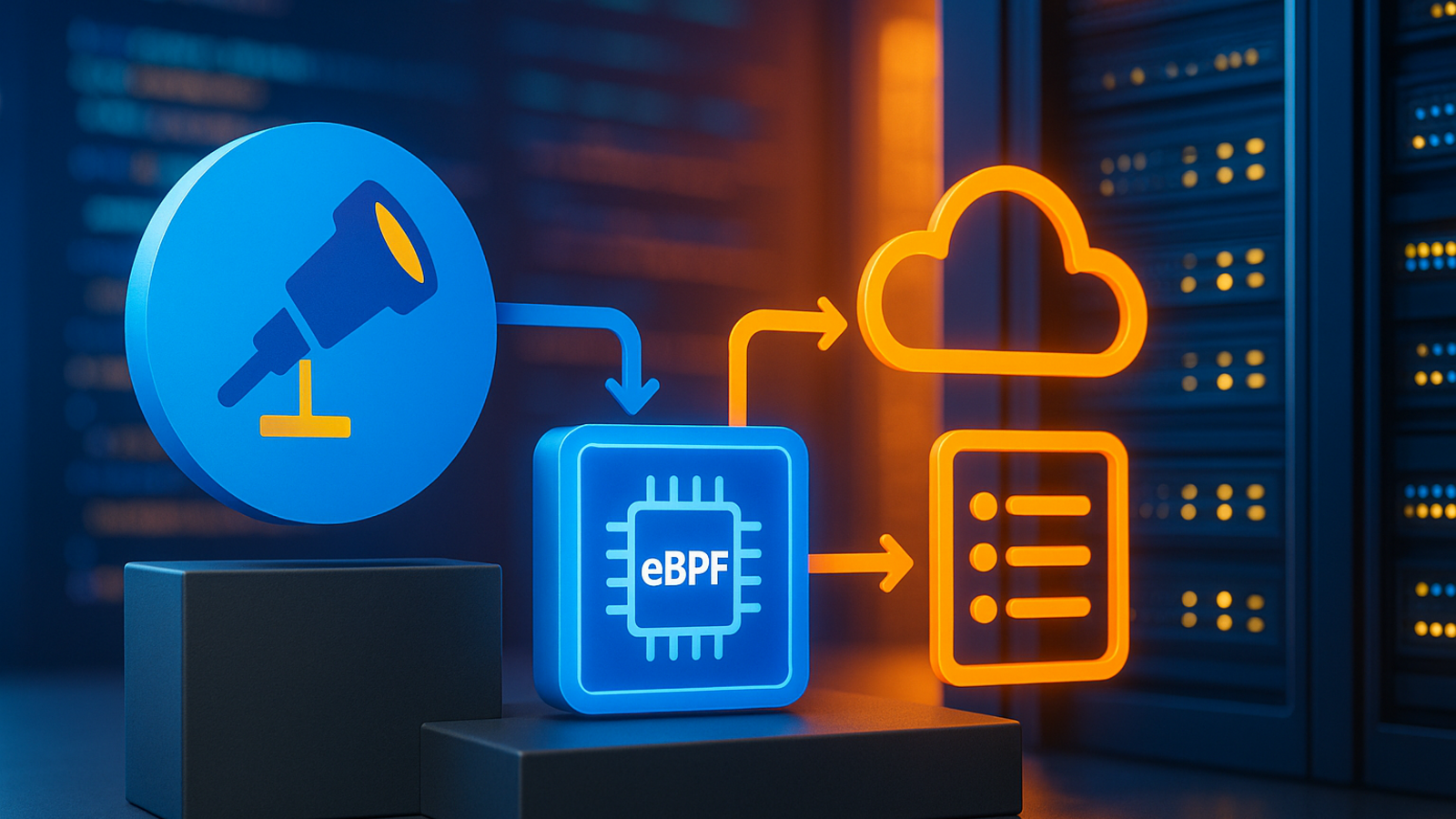
OpenTelemetry eBPF Instrumentation (OBI) v0.7.0 introduces HTTP header enrichment—a capability that adds request context to traces without touching application code. For incident responders, this means moving from error rate is up to this is isolated to one customer cohort in seconds, dramatically reducing mean time to resolution for customer-impacting incidents.
The Incident Response Gap
Traces tell you something is wrong by showing latency spikes, error rates, and service dependencies. The harder problem is figuring out who is affected and why, quickly. Header enrichment closes this gap by capturing request metadata—tenant IDs, user segments, feature flags, and A/B test groups—that usually stays invisible to observability systems because it only exists in HTTP headers.

The key advantage: this is purely a configuration change on OBI itself. No application rebuilds, no redeployments, no code changes required. This makes it viable for immediate deployment during active incidents when every minute matters.
How It Works
OBI’s eBPF agent intercepts HTTP traffic at the kernel level using kprobes and tracepoints, extracts configured headers, and attaches them as span attributes before the data leaves the node. The configuration uses a policy-based approach with explicit include and obfuscate rules:
- Include rules specify which headers to capture and emit with spans
- Obfuscate rules mask sensitive values while still recording header presence
- Scope settings apply rules to requests, responses, or both
- Case-insensitive matching prevents missing headers due to casing differences
The eBPF-based implementation adds minimal overhead since it operates entirely at the kernel level without userspace interception or context switches.
Security Considerations
The configuration supports header obfuscation for sensitive data. Headers like Authorization or Cookie can be masked while still appearing in traces (shown as asterisks or custom replacement strings), providing evidence that the header was present and had a value without exposing credentials or session identifiers.
This balances observability needs with security requirements—teams can see that authentication was attempted without seeing the actual tokens.
Practical Impact
With enriched spans, trace search can filter by http.request.header.x-tenant-id to identify affected cohorts instantly. This turns distributed traces from a diagnostic tool into a debugging tool for customer-impacting incidents.
Example scenario: latency spikes in a multi-tenant service. Previously, you’d see elevated latency across all spans but need to correlate with logs or database queries to identify the affected tenant. With header enrichment, the tenant ID is in the trace itself—filter by the header attribute and immediately see which tenant’s requests are slow.
Deployment
OBI v0.7.0 is available now from the GitHub releases page. For existing deployments, upgrade the agent DaemonSet and apply the new configuration. New users can start with the header enrichment demo in the repository to see an end-to-end working example.
Scope and Limitations
Currently supported for HTTP/1.1 and HTTP/2 traffic. Header values are captured as string attributes—binary content or very large headers may be truncated. The feature is particularly valuable for microservices using header-based routing, multi-tenant SaaS applications, and environments with extensive A/B testing.

