
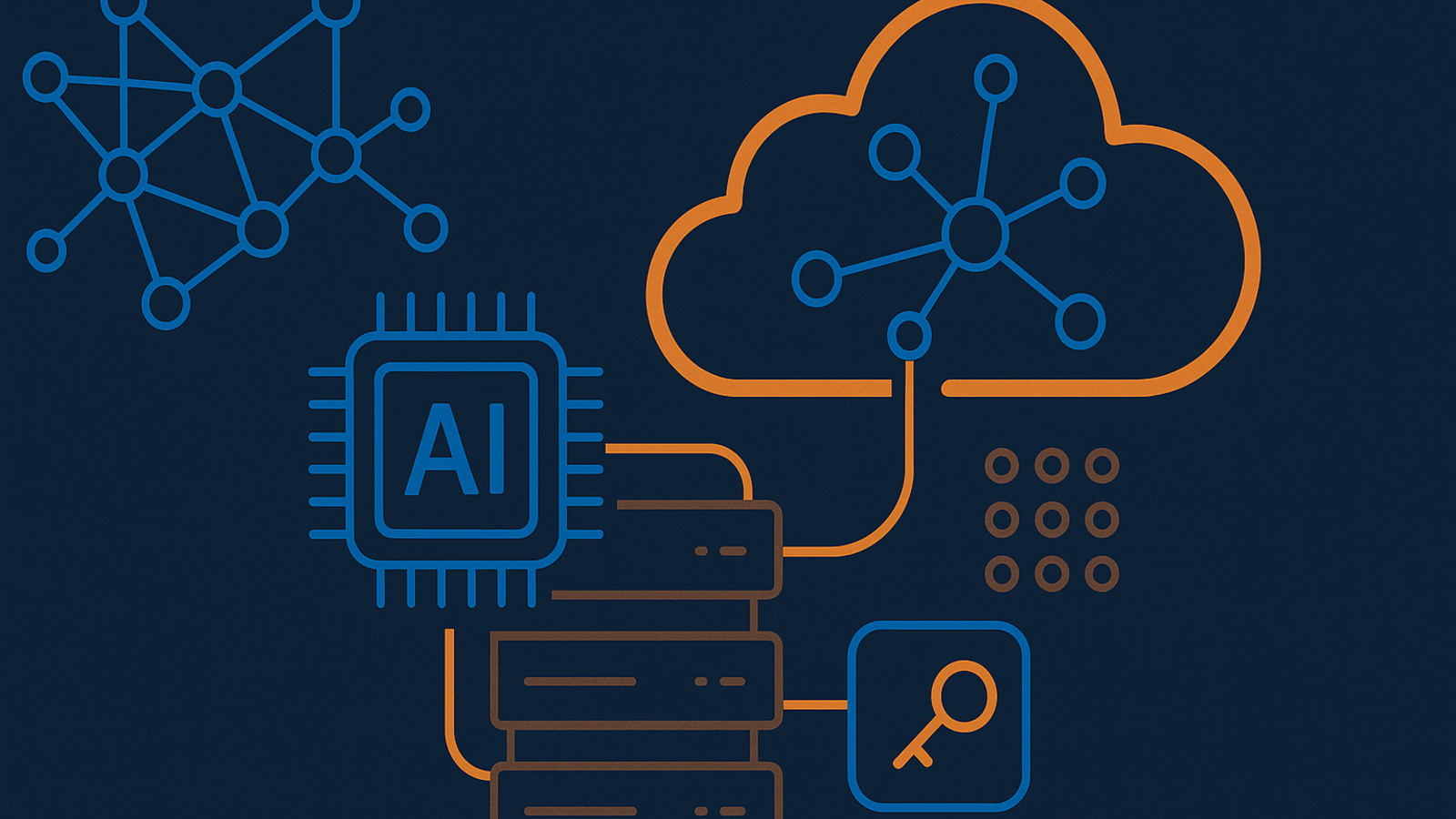
Enterprises have largely moved past the question of whether to use generative AI. The sharper question in 2026 is how to build agents: systems that don’t just generate text, but use tools—querying internal data, filing tickets, opening pull requests, or triggering workflows. This agentic shift is enabled by better models, but it is operationalized by something less glamorous: standardized connectors and context.

One of the most important emerging building blocks is the Model Context Protocol (MCP), an open protocol designed to connect models to tools and data sources in a consistent way. If APIs were the standard interface for software services, MCP aims to be a standard interface for model-to-tool integrations. That matters because enterprise AI systems rarely fail due to model quality; they fail due to integration fragility, permissions sprawl, and lack of audit trails.
Trend #1: “Agent platforms” replace one-off chatbots
Early enterprise AI projects often delivered a chatbot: a UI, a prompt, and a few retrieval hooks. The next wave is broader: agent platforms that can host multiple agents, each with distinct tool access, policies, and memory boundaries. Typical agents include:
- Developer agent: triages CI failures, drafts PRs, explains codebase conventions.
- SRE agent: summarizes incidents, runs approved diagnostic queries, suggests safe remediations.
- Security agent: checks alerts, reviews dependencies, validates configurations against policy.
- Ops agent: handles repetitive tickets like access requests, environment provisioning, and reporting.
To make this safe, organizations are standardizing on “how tools are called” rather than letting each team wire bespoke integrations. That’s where MCP (and similar approaches) become strategic: they let you build a governed tool ecosystem once and reuse it across many agents and UIs.
Trend #2: Permissions, provenance, and audit become first-class architecture
Agentic systems collapse boundaries: a single workflow might touch source code, monitoring, IAM, and ticketing. Without strict controls, an agent becomes a superuser by accident. The leading designs share a few principles:
- Explicit tool permissions: each agent has an allowlist of tools and scopes (read-only vs write).
- Human-in-the-loop for risky actions: production changes require approvals with clear diffs/plans.
- Non-repudiation: every tool call is logged with who/what/when, inputs/outputs, and a trace ID.
- Data minimization: retrieval and context windows should include only what’s needed; secrets and PII are redacted.
- Model isolation: separate environments for experimentation vs regulated workloads; rotate keys; sandbox execution.
In other words, the architecture starts to resemble mature automation systems and zero-trust design. The model is just one component; the platform around it is where safety and reliability live.
How MCP fits into the stack
MCP provides a common way to expose tools to models. In practical terms, that means you can create MCP servers that wrap internal systems—databases, knowledge bases, CI/CD systems, observability platforms—and present them via a consistent interface. Benefits include:
- Reusable integrations: build a connector once; many agents can use it.
- Central policy enforcement: apply authN/Z and logging at the tool boundary.
- Better testing: tool calls can be replayed in staging with deterministic fixtures.
This is also where organizations can implement “safe execution” patterns: simulation modes, rate limits, and scoped credentials per tool. When an agent proposes a change, the platform can require it to produce structured output (diffs, plans, command lists) and validate them against policy before anything executes.
What to do next
If you’re planning an agent rollout, start by treating tools as products:
- Pick 5–10 high-value tools (read-only first): log search, metrics query, ticket lookup, repo search.
- Wrap them with consistent auth and audit (MCP or equivalent), including per-agent scopes.
- Define action tiers: informational, advisory, and executable. Most early wins are informational/advisory.
- Measure outcomes: reduced time to diagnosis, fewer repetitive tickets, faster onboarding.
Agentic AI will not be adopted because it’s impressive. It will be adopted because it is reliable and governable. Protocols like MCP are a sign that the industry is moving from demos to architecture.
Security checklist for enterprise agents
Before you allow an agent to touch production systems, insist on the basics:
- Scoped credentials per tool (no shared “agent superuser” tokens).
- Secrets redaction in prompts, logs, and retrieval results.
- Prompt injection defenses: treat retrieved content as untrusted input and constrain tool usage accordingly.
- Rate limits and circuit breakers on tool calls to prevent runaway loops.
- Deterministic audit logs: store the tool call graph and outcomes so humans can reconstruct decisions.
If you build these controls at the protocol boundary (for example, around MCP servers), you get compounding benefits: every new agent inherits the same guardrails.

