
Ollama v0.18.2 Adds Web Search for OpenClaw and Non-Interactive Mode
Ollama now ships with web search/fetch plugins for OpenClaw and introduces headless mode for CI/CD and automation workflows.
Ollama now ships with web search/fetch plugins for OpenClaw and introduces headless mode for CI/CD and automation workflows.

Ollama v0.18.1+ brings web search and fetch plugins to OpenClaw, letting local models access current information without JavaScript execution.
Ollama 0.18 brings official OpenClaw provider support, up to 2x faster Kimi-K2.5 performance, and the new Nemotron-3-Super model designed for high-performance agentic reasoning tasks.
Ollama 0.18.0 is a short release note, but the three visible changes are telling. Better model ordering, automatic cloud-model connection with the :cloud tag, and Claude Code compaction-window control all point to a local runtime becoming a policy layer between local and remote inference.

Ollama’s 0.17.8 release candidate is not a flashy model-drop release. It is a runtime-hardening release: better GLM tool-call parsing, more graceful stream disconnect handling, MLX changes, ROCm 7.2 updates, and small fixes that make local inference feel more operational and less hobbyist.

Ollama 0.17.7 adds better handling for thinking levels (e.g., ‘medium’) and exposes more context-length metadata for compaction. It’s a small release that hints at a larger shift: local model runtimes are growing the same control surfaces as hosted LLM platforms.

Ollama’s latest releases add new model options (including Qwen-family variants) and tighten tool-call handling. The bigger story: local inference is standardizing around ‘agent-ready’ APIs.

Ollama 0.17.4 adds new model families and reminds operators that local AI stacks behave like software distribution, not just inference. Here’s how to manage versions, updates, and safety in a ‘bring-your-own-model’ world.
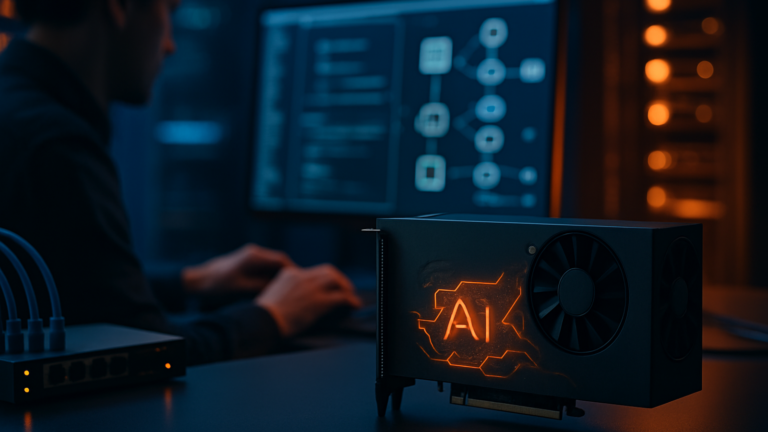
Model Context Protocol (MCP) aims to standardize tool connections. Meanwhile vLLM is pushing serving features like async scheduling and speculative decoding, and Ollama is smoothing the local developer experience. Put together, they hint at the next default stack for local agents.

A practical, ops-minded blueprint for running agentic workflows locally: LangGraph for durable state, MCP for standardized tool boundaries, and Ollama for local inference—plus the guardrails that keep it from becoming an unmaintainable demo.

The ‘LLM inference server’ is quickly becoming a standard platform component. vLLM and Ollama represent two distinct operating models—GPU-first throughput engineering vs developer-friendly packaging. Here’s how to pick based on tenancy, observability, and cost, not hype.