GitHub is rolling out macos-26 GitHub-hosted runners. Here’s why it matters for iOS/macOS builds, code signing, supply-chain controls, and reproducibility in CI.
GitHub-hosted runners now offer macos-26 generally available. Treat this like a platform migration: validate toolchains, codesigning, caches, and flaky tests before the default image shifts.
GitHub Actions now supports uploading and downloading non-zipped artifacts—reducing friction for single-file outputs, browser-based inspection, and ‘double zip’ anti-patterns. Here’s what changed, how to adopt it safely, and why it’s a useful signal for platform engineering teams standardizing CI at scale.
Flux 2.8 lands Helm v4 support (SSA + kstatus health checks), reduces MTTR by canceling health checks when new revisions appear, and expands GitOps feedback loops with PR/MR comment providers and a new Flux Operator Web UI.
Flux 2.8 GA ships with Helm v4 support, bringing server-side apply and kstatus-based health checking to Helm releases. Here’s why that’s bigger than it sounds—and how platform teams should approach the upgrade.
GitHub is tightening the screws on enterprise governance: enterprise-defined custom org roles are GA, and IP allow lists now extend deeper into EMU user namespaces. Here’s what it changes for platform teams.
GitHub is rolling Copilot usage metrics down from enterprise to organization scope, enabling least-privilege reporting. For platform and security teams, this is the missing layer for governing AI coding tools without centralizing all visibility at the enterprise tier.
GitHub is previewing an organization-level Copilot usage metrics dashboard. For platform engineering, it’s a sign that AI tooling will be governed like any other shared service: measured, costed, and optimized. Here’s what to track and how to operationalize it.
GitHub’s workflow dispatch API can now return run metadata, eliminating brittle polling and guesswork in automation. Here’s why it matters for platform teams building ChatOps, self-service, and internal developer portals.
GitHub’s workflow_dispatch API can now return run IDs. That makes self-service CI/CD safer and more observable, enabling tighter coupling between portal actions, audit logs, and rollout status.
GitHub is expanding Copilot coding agent to better support Windows projects and code referencing. This is a platform engineering moment: autonomous agents are becoming a first-class CI actor, and repos will need new guardrails.
OIDC in GitHub Actions has quietly become the default pattern for ‘secretless’ CI/CD. Here’s how to think about it as a platform primitive: trust boundaries, short-lived credentials, and how it changes the way you deploy into Kubernetes and cloud APIs.
OpenTofu 1.11.5 ships with upstream Go security fixes and continues a trend: infrastructure-as-code tools are becoming security products as much as automation products. Here’s what that means for platform teams.
Backstage-style portals, GitOps controllers, and IaC engines (Terraform/OpenTofu/Pulumi) are converging into repeatable platform ‘golden paths.’ Here’s a 2026 blueprint that stays modular.
OpenTelemetry adoption is running into a new bottleneck: operating collector fleets. IBM Instana just made OpAMP-powered fleet management generally available, highlighting a shift from ‘instrumentation’ to ‘collector ops’ as the next maturity step.
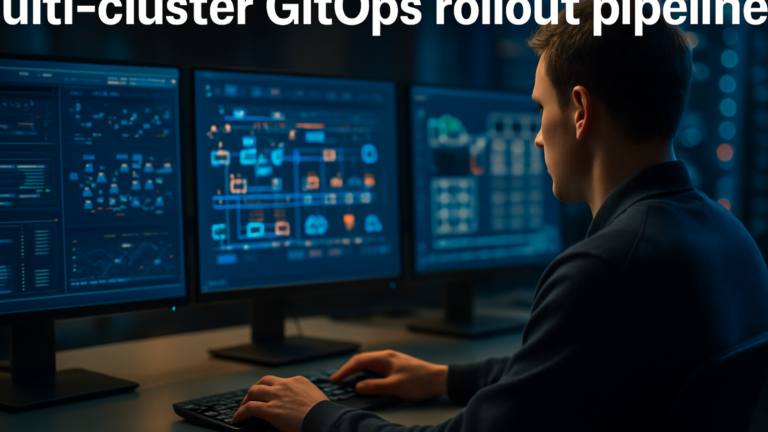
GitOps is great until you run a large Kubernetes fleet. Fastly describes the gaps they hit — orchestration, validation, blast-radius control — and how they layered a rollout system on top of Argo CD. Here’s what platform teams can steal.
OpenTofu’s new -json-into flag streams machine-readable events without sacrificing the human CLI UX. It’s a small UX change with big implications for CI/CD, policy checks, and developer experience.
OpenTofu’s CNCF home matters less for politics and more for operations: predictable releases, ecosystem trust, and a path to standardizing policy. Here’s a practical blueprint for running OpenTofu at scale with GitOps, drift control, and safe migration from Terraform.
GitLab’s Transcend event pitches agentic AI across the software lifecycle with governance. Here’s what’s real, what’s marketing, and what to validate in your pipeline.
Argo CD 3.3.0 ships new actions and upgrade considerations that matter most to self-managing installations—where the GitOps tool is also managed by GitOps.