
The Linux Foundation provides a neutral, trusted hub for developers to code, manage, and scale open technology projects.
The Linux Foundation

Related Coverage
Cloud Native
OpenTelemetry’s Production Moment: Three Releases That Change the Observability Game
OpenTelemetry ships Go compile-time instrumentation v1, one-command Linux packages, and lambda expressions for OTTL pipelines. The observability gap is closing.
Agentic AI
The Agentic AI Surge: How OpenAI, Google, Anthropic, and Databricks Are Redefining What AI Actually Does
In just two weeks, a wave of major announcements from OpenAI, Google, Anthropic, Databricks, Mistral, and OpenClaw have converged on a single thesis: the future of AI is not conversation—it is autonomous, multi-step, tool-using agents that execute workflows. This article surveys the most significant developments, what separates real agents from chat interfaces, and the infrastructure, safety, and governance challenges ahead.
Cloud Native
Kubernetes Becomes the Operating System for the AI Era
Major announcements from Kubernetes, AWS, and Google Cloud converge on a single narrative: Kubernetes is becoming the operating system for autonomous agents, massive-scale inference, and AI-native infrastructure.

Cloud Native
Cloud Native Mid-2026: OpenTelemetry Graduates, Agent-Ready Infrastructure, and the Rise of Green Observability
OpenTelemetry graduates from CNCF, Cloudflare launches temporary accounts for AI agents, and the community confronts telemetry waste with green observability practices.

Agentic AI
Agentic AI in 2026: The Enterprise Stack Goes Production
Agentic AI is no longer experimental. With Microsoft IQ, the MCP protocol standardizing tool connectivity, and enterprise budgets shifting from RPA to autonomous systems, June 2026 marks the moment agentic AI becomes a production-grade capability.

Agentic AI
The Agentic AI Moment: How the Industry Pivoted from Chatbots to Autonomous Agents in June 2026
June 2026 marks the month the AI industry pivoted from chatbots to autonomous agents. Google launched Gemini Spark, Anthropic donated MCP to the Linux Foundation, OpenAI unveiled Operator, and the open-source ecosystem delivered critical agent infrastructure.
Cloud Native
OpenTelemetry Graduates, eBPF Earns Trust, and Gateway API Migrations Go Live: The Cloud Native Ecosystem Matures
June 2026 marks a watershed for the CNCF ecosystem — OpenTelemetry graduates, Inspektor Gadget completes its first security audit, and production teams share zero-downtime migration playbooks from Ingress NGINX to Envoy Gateway. Here is what it means for engineering teams.
Cloud Native
The Quiet Evolution: Headlamp, DRA GA, and Kubernetes Operational Maturity
Kubernetes Dashboard retires in favor of Headlamp, DRA reaches GA for accelerator management, etcd 3.7 adds streaming queries, GKE introduces standby buffers, and the Kubernetes Security Response Committee corrects unfixed CVE records — the operational undercurrents shaping the platform.

Agentic AI
Welcome to the Agentic Gemini Era: The Week Agentic AI Went Mainstream
Google I/O 2026 declared the agentic era with Gemini Spark and 3.5 Flash. OpenAI shipped self-improving Codex agents, Mistral rebranded to Vibe, and Cohere open-sourced Command A+. Meanwhile, the ITBench-AA benchmark reveals frontier models still score below 50% on real enterprise tasks. The agentic era is here—but the gap between demo and deployment remains wide.
Cloud Native
Cloud Native Infrastructure Enters the AI Era: How the CNCF Ecosystem Is Evolving for Agentic and LLM Workloads
The CNCF ecosystem is being re-architected for AI workloads — from Fluid’s 30-second LLM cold starts to OpenTelemetry’s GenAI observability standards, Cloudflare’s agent sandboxes, and k6 2.0’s AI-assisted testing.
DevOps
May 2026 DevOps Roundup: OpenTofu 1.12, Vault Envelope Encryption, and the Platform Engineering Evolution
May 2026 brings major DevOps developments: OpenTofu 1.12 introduces dynamic prevent_destroy and JSON output improvements, HashiCorp Vault launches envelope encryption for large artifacts, Tekton v1.12.0 hardens security with a dedicated events controller, and Backstage v1.51.0 delivers new UI components and auth hardening. Here is what platform teams need to know.
Agentic AI
Agentic AI Crosses the Chasm: From Autonomous Math Proofs to Enterprise Production
Agentic AI crosses from research to production: OpenAI's model disproves an 80-year math conjecture, Codex expands to mobile and on-prem, IBM and Hugging Face launch the Open Agent Leaderboard, NVIDIA unveils the Vera Rubin platform for agentic inference, and Google commits $15B to global AI infrastructure.
DevOps
AI-Driven Development and Infrastructure Automation Reshape the DevOps Landscape
The DevOps and Platform Engineering space is undergoing one of its most significant shifts in years. In May 2026, major tooling vendors and open source projects are converging on a common theme: AI-powered development workflows must be paired with robust validation, infrastructur
Cloud Native
From Sandboxes to Security: How Cloud Native Infrastructure Is Adapting to the Agentic AI Era
The CNCF ecosystem is rapidly retooling for an agent-driven future. From Falco's Prempti agent security tool to Cloudflare's Claude Managed Agents integration and k6 2.0's AI-assisted testing, cloud-native infrastructure is becoming agent-native infrastructure.

Agentic AI
The Agentic AI Landscape: Benchmarks, Platforms, and Industry Moves Reshaping 2026
The agentic AI conversation has shifted from hype to hard metrics. In May 2026, three threads dominate: Google is shipping agent-first developer platforms, the open-source community is building rigorous benchmarks, and enterprise vendors are consolidating around sovereign AI stacks.
Cloud Native
Kubernetes v1.36 Released: User Namespaces Go GA, Workload Scheduling Gets Smarter
Kubernetes v1.36 (Haru) brings User Namespaces to GA after 6 years of development, introduces tiered Memory QoS protection, and adds alpha support for Workload Aware Scheduling — marking a significant evolution in container security and resource management.

Agentic AI
The Rise of Agentic AI: How Autonomous Agents Are Reshaping Software Development in 2026
Agentic AI is transforming software development in 2026. From multi-agent systems to frameworks like LangGraph and CrewAI, explore how autonomous agents are reshaping infrastructure, security, and the future of coding.

DevOps
The DevOps Revolution: Key Trends Reshaping Platform Engineering in 2026
From agentic CI/CD to open observability standards, explore the pivotal developments defining modern DevOps practices in 2026, including Grafana 13, supply chain security mandates, and the rise of AI-augmented platform engineering.

AI
The State of AI Infrastructure in 2026: Inference Engines, Hardware Evolution, and Production-Ready Systems
The AI infrastructure landscape has undergone a seismic shift in 2026. From vLLM and TGI to NVIDIA Blackwell B200 and agentic systems, explore the technologies defining production-ready AI at scale.
Agentic AI
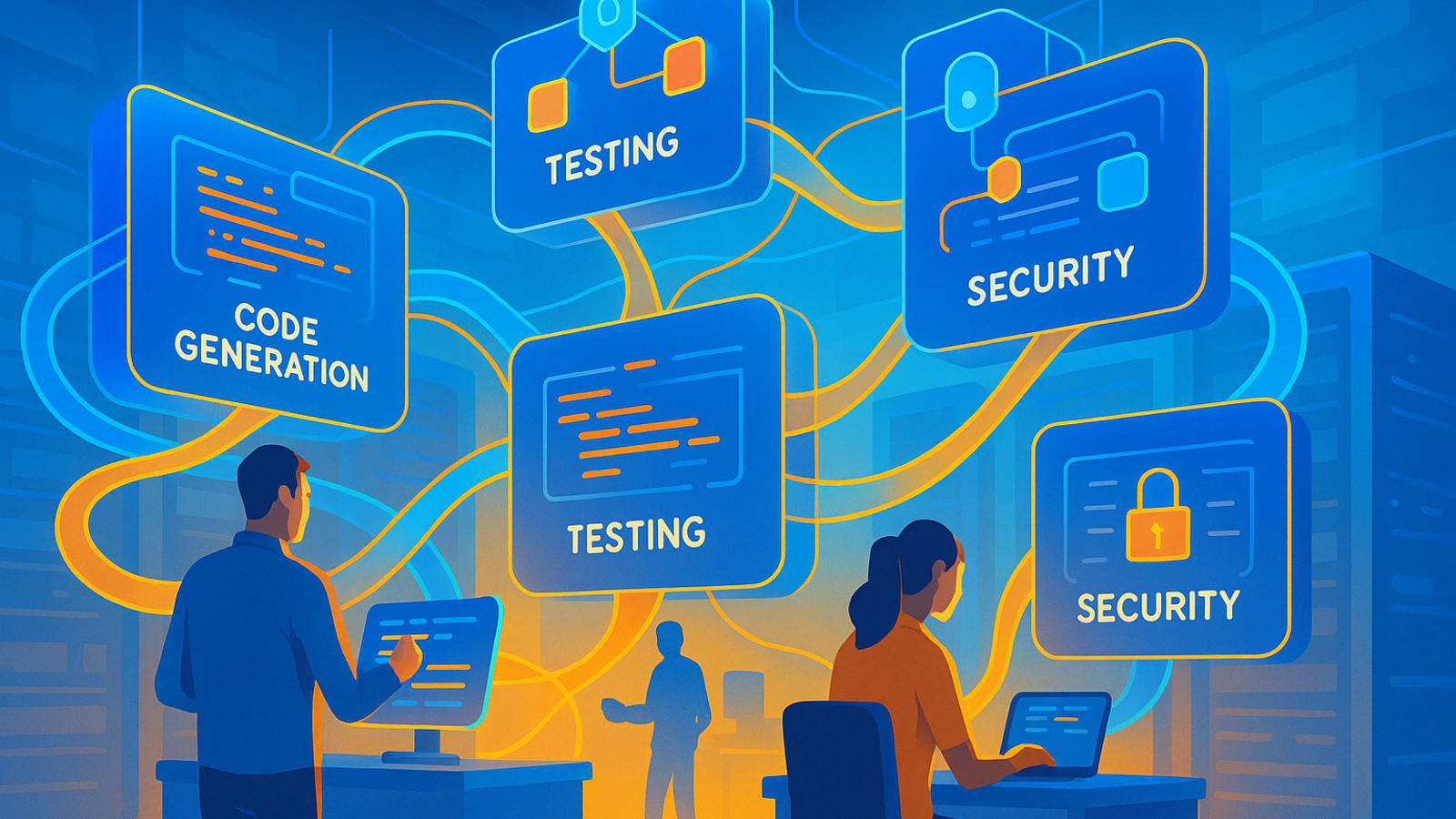
Agentic AI in 2026: From Single Agents to Autonomous Software Development Teams
By end of 2026, 40% of enterprise applications will embed AI agents. Explore the multi-agent frameworks, A2A protocol, security challenges, and practical applications of agentic AI in software development.

Kubernetes
Kubernetes 1.36 Arrives: User Namespaces Go GA, Ingress NGINX Retires, and CNCF Warns on LLM Security
Kubernetes 1.36 drops April 22 with 80 enhancements including stable user namespaces, OCI VolumeSource, and the retirement of Ingress NGINX. Plus: CNCF warns that Kubernetes alone isn't enough to secure LLM workloads.

Cloud Native
Terraform vs OpenTofu in 2026: The Infrastructure Control Plane Decision Framework
The 2023 debate was about licensing. The 2026 decision is about control plane ownership. Three years after HashiCorp moved Terraform from MPL to BSL, teams that delayed switching are now facing renewal cycles, growing HCP dependency, and organizational pressure around vendor lock-in. Here’s the decision framework for infrastructure teams evaluating their path forward. What Actually […]

DevOps
Kubernetes 1.36 Sneak Peek: DRA Enhancements and User Namespace GA on the Horizon
Kubernetes 1.36 preview shows DRA hardware maintenance support and Linux User Namespaces graduating to GA for April 2026 release.

AI
CNCF Introduces ModelPack: A New Open Standard for Managing AI Model Artifacts
The CNCF introduces ModelPack, an open standard for packaging and managing AI model artifacts in container registries, bridging the gap between ML pipelines and Kubernetes operations.

DevOps
Kubescape 4.0 Brings Enterprise Stability and AI Security Guardrails to Kubernetes
Kubescape 4.0 delivers enterprise-grade runtime threat detection GA, AI-native security features, and posture scanning for agentic workloads.

Cloud Native
Microsoft Doubles Down on Kubernetes at KubeCon Europe 2026
From Open Source contributions to Azure Service updates, Microsoft made significant waves at KubeCon + CloudNativeCon Europe 2026 in Amsterdam.

Cloud Native
containerd 2.3.0-beta.0: First LTS Under Kubernetes-Aligned Release Schedule
containerd 2.3.0-beta.0 is the first LTS release under the new Kubernetes-aligned schedule, with CRI improvements, EROFS support, and two-year support commitment.

Cloud Native
Cloud Native: CNCF’s new India schedule shows where platform engineering and AI operations are colliding next
The KubeCon + CloudNativeCon India 2026 schedule is less interesting as an event announcement than as a demand signal. AI + ML, observability, operations, platform engineering, and security are showing up together because teams no longer get to treat them as separate tracks in production.

Cloud Native
KubeCon + CloudNativeCon Europe 2026: What to Watch in Amsterdam (March 23–26)
KubeCon + CloudNativeCon Europe heads back to Amsterdam on March 23–26, 2026. Here’s a practical preview of the themes to track—platform engineering, security, observability, and AI—and how to get more value out of the week.
OpenStack
OpenInfra’s VMware-to-OpenStack moment: migration tooling, ecosystem signals, and what operators should do now
OpenInfra is leaning into a wave of interest from organizations rethinking virtualization and private cloud economics. Between community visibility (FOSDEM) and vendor migration announcements, 2026 is shaping up to be a ‘prove it in production’ year for OpenStack operators.
OpenStack
OpenStack elections (2026): why PTL & TC votes shape the roadmap
OpenStack’s 2026 technical election cycle opens Feb 4 with nominations for PTLs and the Technical Committee. This is where roadmap, stability, and AI-era priorities get decided.
