
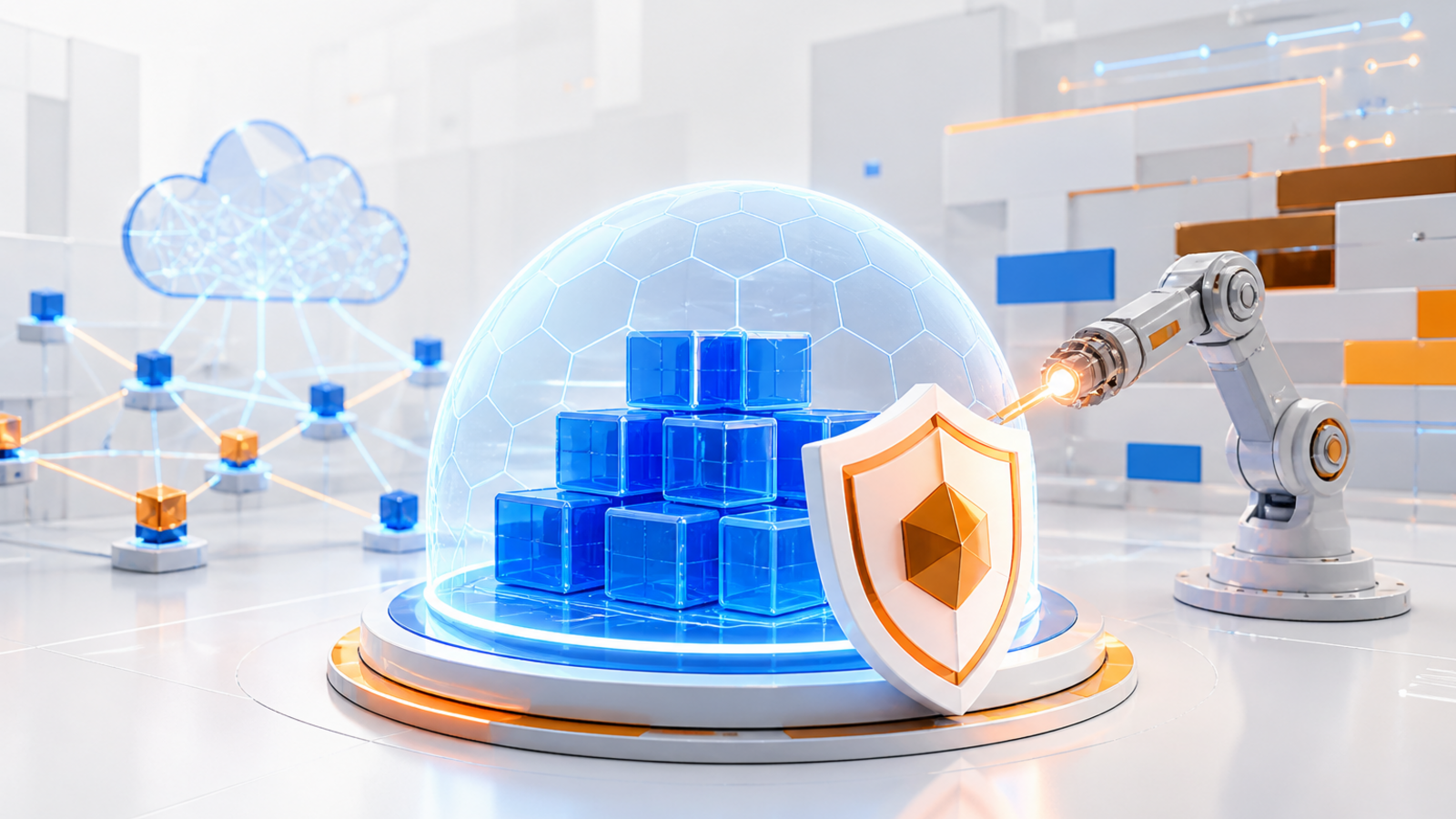
Red Hat OpenShift Lightspeed 2 crosses an important boundary for Kubernetes operations. The product no longer stops at explaining a problem or gathering evidence from a cluster; it can now use read-write tools to propose and carry out changes, with explicit administrator approval. A separate technology-preview mode can investigate incidents autonomously inside an isolated pod and return a root cause and remediation proposal.
That progression—from documentation chatbot to cluster-aware assistant to operational agent—makes Lightspeed 2 a useful test of how AI will enter Kubernetes control loops. Its most consequential feature is not the model behind the interface. It is the permission and execution design around the model: live cluster context, visible investigation steps, sandboxed autonomous work, dynamic role-based access control, approval gates, and traceability.
For platform teams, the release poses a practical question. If an AI agent can inspect and change a cluster, how should its authority differ from that of an engineer, an operator, or a GitOps controller? Lightspeed 2 provides an early answer, but it also exposes the controls teams must validate before trusting agent-assisted remediation in production.
From grounded answers to live operations
The first version of OpenShift Lightspeed answered questions using Red Hat documentation matched to the OpenShift version in use. That version-aware grounding addressed a familiar operational hazard: advice can be accurate for one release and wrong for another. The assistant could synthesize the documentation, but it could not inspect the actual cluster.
Version 1.1 added a built-in Model Context Protocol server with read access to pods, events, logs, and other cluster resources. That changed the assistant from a documentation search layer into a diagnostic interface. A question about a crashing pod could trigger inspection of events and logs instead of producing a generic checklist. Later releases added model-provider choices, OpenTelemetry tracing, and configurable TLS profiles.
Lightspeed 2 adds the step with the highest operational risk and value: write-capable tools. In the generally available troubleshooting chat, an operator can guide an investigation in real time, redirect it, request additional checks, and review each action. Any cluster-changing operation pauses for approval. The assistant can also generate visualizations from metrics through a Perses integration, keeping evidence and discussion in the same workflow.
The autonomous mode, currently a technology preview, takes a different path. It creates an isolated execution environment with its own workspace and OpenShift command-line access, develops a plan, checks the cluster, adjusts its investigation, and returns a proposed fix. The human remains responsible for approving a state change.
Two modes create two different trust models
It is tempting to describe troubleshooting chat and autonomous runs as the same agent with different interfaces. Operationally, they represent distinct trust models.
Collaborative troubleshooting
In the chat mode, the engineer stays inside the investigative loop. They can see what the assistant is checking, add context, stop an unproductive direction, and challenge the conclusion before approving a change. This resembles pair troubleshooting: the agent accelerates evidence collection, while the operator continuously supplies judgment.
This mode fits ambiguous incidents, unfamiliar applications, and environments where local knowledge matters. A cluster event may point to a failed readiness probe, but only the service owner may know that a rollout is intentionally waiting for a dependent system. Continuous human steering reduces the chance that technically plausible evidence is interpreted without business context.
Autonomous investigation
An autonomous run separates investigation from interactive supervision. That can be valuable when alerts are repetitive, the diagnostic path is well understood, or responders need a prepared assessment before they engage. OpenShift 5 can connect Alertmanager to Lightspeed so that an alert automatically starts an investigation and stages a remediation plan for review.
The reduced interaction increases the importance of boundaries. Red Hat says autonomous work runs in sandboxed pods under dynamic RBAC, and proposed state changes require administrator approval. If a fix fails, the design escalates to a human rather than repeatedly guessing. Those are not peripheral security features; they are the product’s core operational contract.
Approval is necessary, but it is not the whole safety model
A confirmation dialog can prevent an unreviewed write, but it does not guarantee a good decision. During an outage, responders may approve quickly, especially when an interface presents a confident diagnosis. The quality of the approval depends on whether the product exposes enough evidence for an informed review.
Teams evaluating Lightspeed 2 should check that every proposed action answers four questions:
- What evidence supports the diagnosis? The operator should be able to inspect relevant events, logs, metrics, and traces rather than receiving only a summary.
- What exact state will change? Approval should describe the target resource, fields, namespace, and expected effect, ideally as a reviewable diff.
- What authority will execute the action? The identity, role bindings, and scope should be explicit and limited to the incident.
- How can the change be reversed? The workflow should identify rollback steps and warn when a proposed operation is difficult to undo.
Least privilege also needs to be contextual. A fixed cluster-wide service account would be a poor match for an agent whose task may involve one deployment in one namespace. Dynamic RBAC can narrow authority for a run, but teams need to verify how roles are created, how long credentials remain valid, whether privilege expansion is possible, and how cleanup occurs after failure.
Observability becomes part of the agent control plane
Lightspeed’s operational value depends on access to trustworthy telemetry. OpenShift 5 positions the assistant across metrics, events, pod logs, and distributed traces, allowing it to assemble evidence that engineers would otherwise gather from several tools. Perses dashboards can be created from natural-language requests, with the generated PromQL available for review.
That transparency matters. AI-generated queries should be treated as executable analytical code. A chart can look authoritative while using the wrong label selector, aggregation, time range, or rate window. OpenShift marks generated panels as AI-assisted and lets teams inspect the query before pinning a dashboard. The same principle should apply to every diagnostic artifact: operators need a path from a conclusion back to the source signal.
OpenTelemetry tracing also provides a second form of observability: visibility into the agent itself. OpenShift 5 can expose audit traces for agentic runs through Tempo, linking from the Agentic Runs interface to the corresponding trace. That offers a record of human-agent interaction and tool execution that can support incident review and compliance work.
Agent tracing should not be confused with a conventional application trace. Platform teams will need retention policies, access controls, and redaction rules appropriate for operational prompts and tool results. Those records may contain resource names, topology, log fragments, or other sensitive context. OpenShift’s OpenTelemetry stack includes a redaction processor, but organizations still have to decide which attributes are safe to retain and who can query them.
The GitOps boundary remains unresolved
The release’s largest architectural tension is the relationship between direct remediation and declarative management. Many OpenShift environments use GitOps as the source of truth. If an agent patches a live object while a controller continuously reconciles that object from a repository, the fix may be reverted, create configuration drift, or conceal the durable change that is actually required.
Red Hat identifies future GitOps integration as an area of work, rather than claiming that Lightspeed 2 has solved it. Until that integration arrives, platform teams should define policy by resource class. Temporary runtime interventions might be appropriate as direct changes, while application configuration, policies, and operator-managed resources may need a pull request or another declarative workflow.
A safe production design should distinguish at least three outcomes:
- Read-only diagnosis: the agent gathers evidence and recommends an action without receiving write authority.
- Ephemeral remediation: the agent performs a bounded operational action, such as restarting a failed workload, with explicit approval and an audit record.
- Durable configuration change: the agent proposes a patch through the organization’s source-controlled delivery process, where policy checks and reviewers can evaluate it.
Without that separation, “human in the loop” can still lead to two competing control loops: a person approves an agent’s live change, and GitOps later restores the previous state. Authority must be designed around the system of record, not only around Kubernetes API permissions.
A practical evaluation plan for platform teams
Lightspeed 2’s generally available chat mode and technology-preview autonomous mode deserve different rollout plans. Teams can begin with the interactive mode in a non-production cluster, using familiar failure scenarios and read-only access. The objective should be to measure diagnostic correctness, evidence quality, and time saved before enabling writes.
A structured evaluation should include:
- Known incidents. Replay failures with established root causes, including CrashLoopBackOff, insufficient resources, failing probes, certificate problems, and storage attachment errors.
- Misleading symptoms. Test scenarios where the most visible error is downstream from the real problem and verify that the agent continues investigating.
- Permission denial. Confirm that the agent fails safely when it cannot read or modify a resource and does not request unnecessarily broad privileges.
- Conflicting control loops. Exercise operator-managed and GitOps-managed resources to see whether proposed changes account for reconciliation.
- Bad remediation. Reject or simulate failure of a proposed fix and verify escalation, rollback guidance, and the absence of uncontrolled retry loops.
- Audit reconstruction. Ask an independent reviewer to reproduce what the agent observed, proposed, and executed using logs and traces.
Only after these tests should a team consider write permissions, and those should begin with narrow namespaces and low-impact operations. Autonomous alert-triggered runs need an additional review of cost, concurrency, storm control, and data volume. A widespread infrastructure failure could generate many similar alerts; an investigation system must avoid multiplying load on an already stressed API server.
What Lightspeed 2 says about Kubernetes operations
The release shows that agentic operations are becoming a control-plane design problem rather than a chatbot feature. Models may improve, but production adoption will hinge on identity, permission scope, isolation, approval semantics, observability, and reconciliation with existing automation.
OpenShift Lightspeed 2 makes those concerns concrete. Its troubleshooting chat offers a measured route to faster investigations with continuous human steering. Its autonomous mode illustrates the potential of preassembled incident analysis, while its technology-preview status appropriately signals that the more independent workflow needs careful validation.
The useful benchmark is not whether the agent sounds like an experienced SRE. It is whether the surrounding system makes its evidence inspectable, its authority minimal, its actions reversible, and its failures contained. Platform teams that evaluate Lightspeed 2 against those criteria will learn something broader than whether one product can diagnose a crashing pod: they will establish the governance model needed for any AI agent that receives access to a Kubernetes cluster.

