
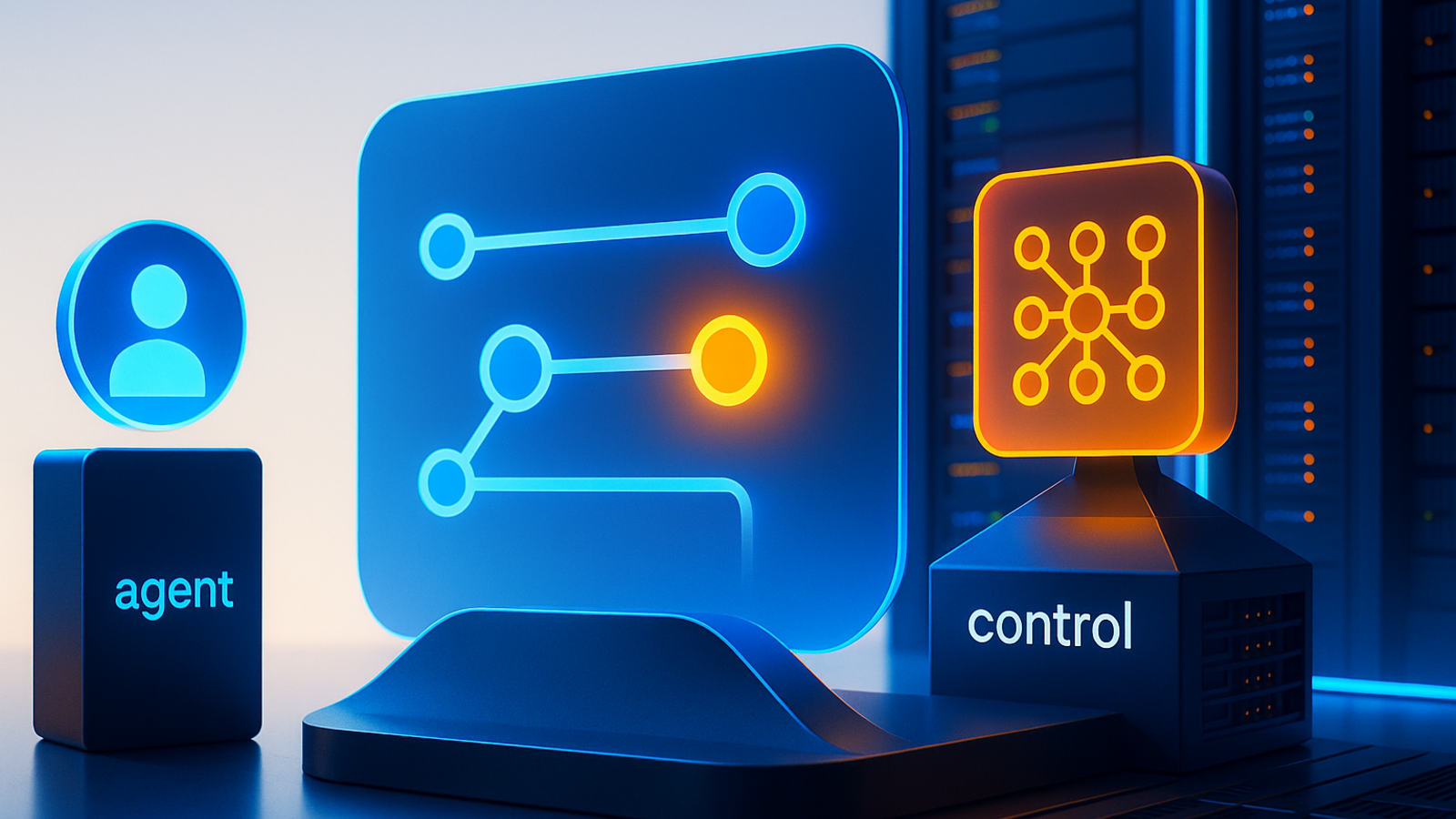
Agentic AI has spent the last year moving from demo-friendly chat loops toward something much closer to software operations. The shift is easy to miss because many launch posts still frame agents as assistants that can reason, use tools, and complete a task. That description is no longer enough. What matters now is whether an agent can run inside a real environment, survive more than one turn, stay inside budget, obey policy gates, and execute on a schedule without a human acting as the glue.
Google’s latest Managed Agents update for the Gemini API is one of the clearest signs that the market is converging on that more practical definition. The update makes Gemini 3.6 Flash the default model for managed agents, adds environment hooks that can block, lint, or audit tool calls inside the sandbox, introduces budget controls for multi-turn loops, and adds scheduled triggers that let agents run as recurring workers. The headline is not simply that agents can do more. The important change is that developers are being given the control surfaces needed to treat agents like governed systems rather than entertaining prototypes.
That matters far beyond Google’s own stack. Recent product moves from OpenAI and OpenClaw point in the same direction. OpenAI highlighted how AI-native companies are turning workflows such as onboarding, account management, and developer integrations into operating capability rather than one-off copilots. OpenClaw’s newest release, meanwhile, emphasizes background sessions and more dependable task completion, reinforcing the idea that autonomous work only becomes useful when the runtime can hold state and actually finish the job. The throughline is simple: the next contest in agentic AI is not who can produce the flashiest reasoning trace, but who can make autonomous systems dependable enough to enter normal operational workflows.
Why This Release Matters More Than Another Model Upgrade
Model refreshes still matter, and Google is clearly using this release to move managed agents onto Gemini 3.6 Flash by default. But the most consequential pieces are the surrounding controls. In the Google write-up, managed agents are described as coordinated runtimes that combine reasoning, code execution, package installation, file management, and web retrieval inside an isolated cloud sandbox. That is already a bigger claim than standard assistant APIs. Once a platform gives an agent access to execution, files, and multi-turn autonomy, the problem shifts from raw intelligence to governance and repeatability.
That is why environment hooks stand out. Google now lets teams run custom scripts before or after each tool call in the sandbox. In practical terms, this means developers can inspect a pending write, deny an unsafe action, trigger a validation pipeline, or apply formatting and compliance checks after the tool runs. That sounds modest until you compare it with how many so-called agent frameworks still rely on best-effort prompting to keep tools under control. Prompting can express policy, but hooks enforce it. The difference is the same one that separates a coding standard from a CI gate.
Google’s own examples point directly at the production use case. A pre-tool hook can deny certain classes of actions outright, while a post-tool hook can run automated formatting or verification. The company also cites Offdeal, which uses hooks inside the remote sandbox to validate logo assets for banker-ready decks. That example is valuable because it is not glamorous. It is operational. The system is being measured on whether it can satisfy a precise quality bar with repeatable checks, not on whether it can talk convincingly about finance.
Agentic AI Is Becoming an Execution Layer
The strongest reading of this update is that managed agents are becoming an execution layer for workflow software. If an agent can run in a hosted environment, call tools, preserve files, respect hooks, and restart with a fresh budget, then it starts to resemble a programmable worker process more than a chat endpoint. That changes how teams should think about deployment. Instead of asking whether an assistant can help a user complete a task, engineering leaders can ask whether an agent can own a bounded piece of work with observability and guardrails.
Budget controls are central to that shift. Google notes that managed agents can consume significant tokens because they execute multi-turn autonomous loops, and now developers can cap total token use with max_total_tokens. When the limit is reached, execution pauses safely and the environment is preserved so the task can continue later. This is not just a billing feature. It is a scheduling and failure-management primitive. In a real workflow, you do not want an autonomous loop quietly burning budget or collapsing state when it hits a limit. You want it to stop, surface an incomplete status, and resume under operator control or automated policy.
That same operational framing appears in the new scheduled triggers. A trigger binds an agent, environment, prompt, and cron schedule into a persistent resource that fires without manual intervention, reusing the same sandbox so files persist across runs. This is the kind of feature that turns agent demos into maintenance jobs, audit jobs, report-generation jobs, and integration jobs. It also exposes a hard truth about agentic AI: once the system starts running unattended, everything around the model becomes more important. State hygiene, validation, lifecycle controls, and cleanup are what separate a useful agent from a liability.
From Copilot UX to Workflow Ownership
OpenAI’s latest enterprise case-study post offers a helpful supporting signal. The headline there is not about a new frontier benchmark. It is about companies turning workflows into operating capability. That wording is revealing because it captures the real commercial transition underway. Buyers are moving past the idea that AI should merely sit beside an employee as a conversational helper. They increasingly want AI systems to absorb the repetitive structure of actual business processes: onboarding flows, developer integrations, account operations, internal research, and document assembly.
For that reason, the best way to interpret Google’s release is not as a competitor-specific feature bundle but as evidence that major vendors now understand what the buyer wants from agentic systems. Enterprises are asking for bounded autonomy, policy enforcement, resumability, traceability, and predictable cost controls. If a platform cannot provide those, teams are forced to rebuild the missing pieces themselves with brittle orchestration and sidecar scripts. That is expensive, hard to secure, and difficult to maintain across model updates.
The same pattern shows up in OpenClaw’s latest release, even though the product targets a different slice of the market. Its release notes emphasize background sessions, the ability to start work without switching pages, and fixes aimed at ensuring replies actually finish the job. Those details reinforce an underappreciated point: autonomous work is only valuable when the surrounding runtime reliably carries the task from initiation to completion. The model can be brilliant, but if the session dies early, loses context, or returns control before the task is done, the user still experiences failure.
Why Hooks Are the Real Story
The phrase environment hooks may sound like a developer convenience, but it may end up being one of the more strategically important features in the current agent wave. Hooks create a bridge between AI reasoning and the operational discipline that software teams already trust. Security teams can inject deny logic. Platform teams can trigger formatting or test routines. Compliance teams can log specific tool actions. Product teams can add workflow-specific verifiers without retraining a model or hand-authoring ever more complex prompts.
That bridge matters because the core challenge in agentic AI is not merely tool use. It is trustworthy tool use. Most real failures in autonomous systems do not come from the inability to produce a plausible answer. They come from silent drift, uncontrolled side effects, weak validation, and brittle handoffs between reasoning and execution. Hooks let organizations move some of that burden out of the model and into deterministic enforcement layers.
There is a second-order effect here as well. Once hooks become standard, vendors will be pushed to compete on policy ergonomics and operational telemetry, not just benchmark wins. Developers will ask how granular the hook lifecycle is, what failure semantics exist, whether denials are visible to the model, how retries work, what observability is available, and how external validators can be integrated without collapsing latency. Those are mature platform questions. Their arrival is a sign that the category is growing up.
What This Changes for Builders Right Now
Teams building agentic products should take at least three practical lessons from this moment. First, default autonomy is no longer enough. If your architecture assumes the model can self-regulate through prompting alone, you are already behind the market’s reliability expectations. You need explicit controls around what can run, what happens after it runs, and how failures are surfaced.
Second, budget and state should be treated as product features, not backend details. Google’s preserved environments and resumable budget ceilings are useful because they acknowledge that autonomous tasks are often long-lived and imperfect. Product teams should design for partial completion, operator review, and continuation rather than pretending every task will fit inside a single clean execution window.
Third, unattended execution is becoming normal. Scheduled triggers mean developers should start thinking about agent jobs the way they think about cron workloads, ETL pipelines, and CI tasks. That implies stronger logging, better ownership boundaries, and more explicit cleanup behavior. It also suggests that agent platforms will increasingly overlap with infrastructure tooling, not just chat interfaces or model routers.
These lessons apply even to teams that do not plan to use Google’s managed stack. The broader market direction is visible now. OpenAI is talking about workflow capability, Google is productizing policy and scheduling around hosted agents, and OpenClaw is tightening the runtime behaviors that let autonomous work complete in the background. Different products, same architectural destination.
The Competitive Implication
The competitive battleground in agentic AI is shifting from model access to system design. The winning platforms will not simply expose stronger models. They will offer the cleanest path to building agents that can be trusted with real work. That means managed environments, deterministic policy insertion points, resumable execution, cost controls, scheduled operation, and enough observability that platform teams can explain what happened when something goes wrong.
In that context, Google’s Managed Agents update looks less like incremental polish and more like an admission that the next phase of AI adoption will be operational, not performative. Developers are done being told that agents can use tools. They want to know whether those agents can be budgeted, governed, resumed, and left alone long enough to become part of an actual workflow. Google’s answer is increasingly yes, and that answer will pressure every rival platform to meet the same bar.
For builders, that is good news. The tooling is finally catching up to the promises. But it also raises the standard. Shipping an agent today means shipping the controls around the agent. The vendors that understand that will shape the next generation of developer platforms. The ones that keep selling autonomy without infrastructure will find that enterprises are no longer impressed by demos that cannot survive contact with operations.

