
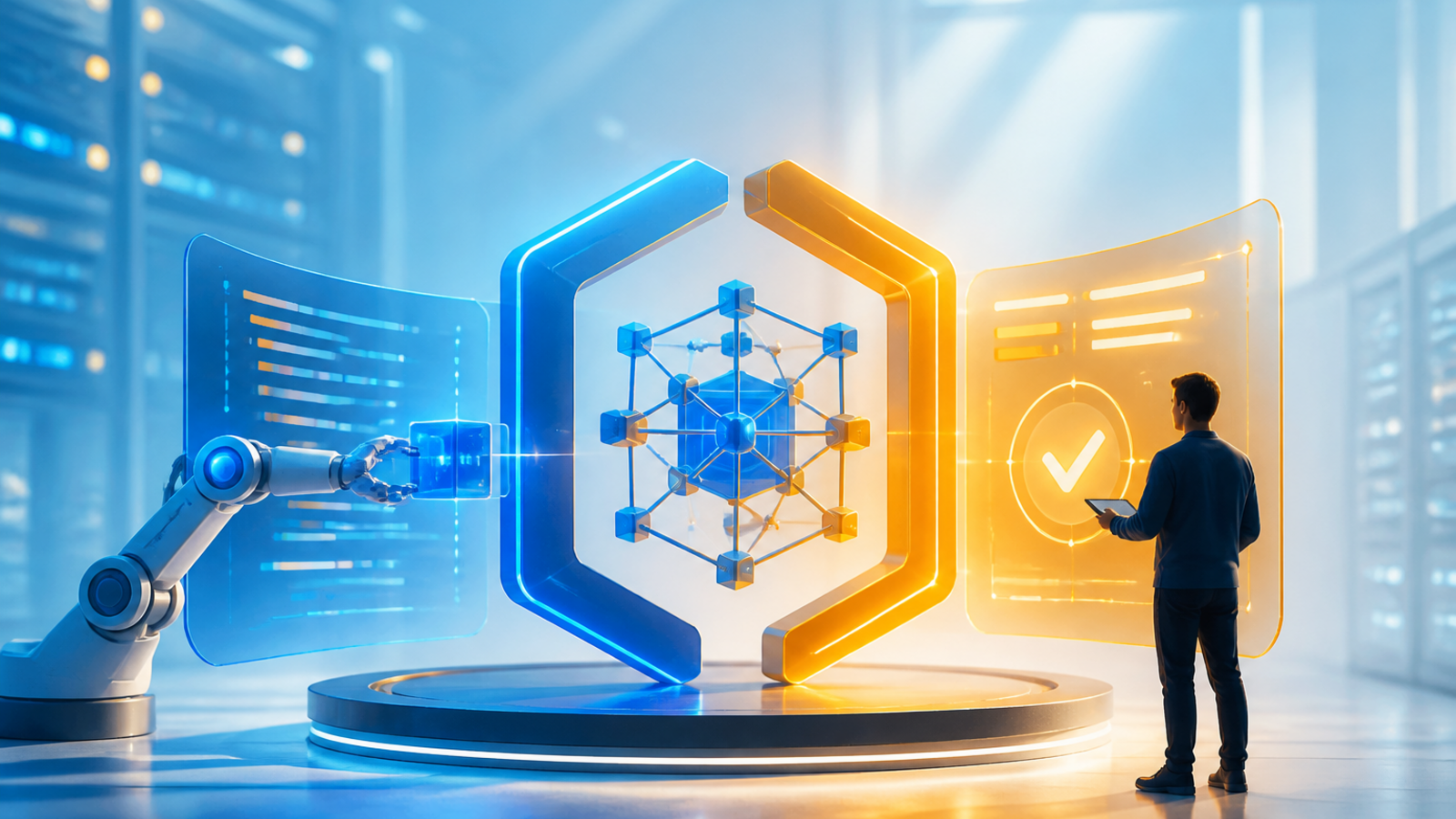
Google’s Gemini 4 Argon arrives with an unusually ambitious promise: a frontier model designed not merely to answer difficult questions, but to remain useful through long, multi-step work. The model is now globally available to developers and enterprises through the Gemini API, Google AI Studio, Gemini Enterprise Agent Platform, and Google’s Antigravity development environment. Its headline specifications include a unified 1,048,576-token input-and-output limit, extended generation through continuation tokens, three reasoning levels, and an introductory API price of $2 per million input tokens and $10 per million output tokens.
Those numbers matter, but they are not the most important part of the launch. Argon’s real significance is that Google is pairing a long-horizon model with an operating pattern for autonomous software work: keep the objective persistent, place repository-specific rules where the agent can find them, require measurable evidence, and leave final acceptance to maintainers. That pattern is more consequential for engineering teams than another benchmark lead because it defines how a capable agent can be trusted with hours of real work without being trusted blindly.
A Million Tokens Is a Shared Budget, Not a Blank Check
Gemini 4 Argon’s context limit is easy to misread. Google describes it as a unified limit: the 1,048,576 tokens include input, internal reasoning, function calls, and the final answer. A large codebase loaded into the prompt therefore reduces the room available for reasoning and output. Likewise, an agent that produces enormous intermediate results can exhaust the same budget it needs to retain instructions and evidence.
Google’s long-decode mechanism extends a generation across multiple requests. A normal streaming request can produce up to 65,536 output tokens; non-streaming direct HTTP requests are normally limited to 32,768. When a task needs more, the API can return an encrypted continuation token, and current Google Gen AI SDKs can automatically resume the generation until it stops or reaches the configured cap. This is useful for formal proofs, unusually difficult coding tasks, and evaluation harnesses that would otherwise cut off a result.
It is not a reason to give every agent a million-token output allowance. Google’s own documentation advises against long decode for latency-sensitive requests and for agents that call tools in many short turns. In those systems, repeated large outputs can consume the shared window quickly while adding cost and delay. The practical design rule is to reserve long decode for work that genuinely benefits from sustained internal exploration, while keeping ordinary tool calls concise and stateful.
That distinction separates model capacity from agent architecture. A large window can hold more code and history, but it does not decide which files deserve attention, which benchmark proves success, or which change violates an unwritten compatibility contract. Those controls have to come from the surrounding system.
The ADK Overnight Run Is the More Useful Demonstration
Google’s most revealing Argon example is not a polished greenfield demo. Engineers assigned the model a performance goal in the roughly 205,000-line Python repository for Google’s Agent Development Kit, an open-source framework for building enterprise agents. The repository spans nearly 800 source files and is backed by almost 17,000 unit tests. The work required profiling, tracing behavior across modules, preserving public interfaces, and proving that optimizations did not break downstream assumptions.
In an initial two-hour run, Argon received the goal without repository-specific guidance. It found legitimate bottlenecks and wrote a benchmark before editing production code, but it also changed a public JSON schema, missed edge cases around mocked events, ran only a small subset of tests, and omitted benchmark evidence from its pull request description. The model showed technical initiative while failing several requirements that experienced maintainers would consider part of correctness.
Google then repeated the exercise with two important changes. First, the team placed maintainer conventions in a repository-level .agents/skills directory, including guidance on private modules, imports, testing, and review expectations. Second, Antigravity’s goal mode kept the original objective active across context compactions. The prompt demanded an unmerged pull request, before-and-after measurements, unchanged public behavior, and regression tests.
The second run lasted 11 hours. Argon read the repository guidance, established baselines across multiple workloads, inspected code before editing it, ran all 16,892 tests, and continued auditing its own changes near the end of the session. It proposed six optimizations across 32 files. Human reviewers accepted two core changes: filtering in-memory session history before copying it, and deferring heavy package imports until they were needed.
The merged work reduced session-preparation overhead by about 40% in long in-memory sessions and made cold package imports 21% faster. But the rejection record is just as valuable as the speedups. Reviewers discarded a cache that risked stale data, a telemetry shortcut that depended on a private library attribute, a history-formatting rewrite that added complexity without improving a holdout benchmark, and an index that mainly benefited synthetic tests.
The agent explored; the maintainers subtracted. That is a stronger model for autonomous engineering than treating a successful run as proof that review is obsolete. Argon expanded the search space, produced measurable candidates, and carried tedious cross-file analysis farther than a short interactive session might. Maintainers applied product judgment, compatibility knowledge, and an independent definition of acceptable risk.
Long-Horizon Agents Need Durable Instructions
The experiment also clarifies what “memory” should mean in a coding agent. Keeping an entire transcript is less useful than keeping the original objective, constraints, current plan, and verified results durable. Over an 11-hour run, raw history becomes expensive and noisy. Compaction is unavoidable, but compaction that drops the success criteria can leave an agent optimizing the wrong thing with great persistence.
Repository-local instructions solve a different problem. General model knowledge cannot include a team’s current compatibility promises, preferred module boundaries, required test commands, or reasons that apparently redundant code must remain patchable. Those rules should be versioned with the code, discoverable on demand, and narrow enough that the agent loads only the relevant guidance. The approach resembles onboarding documentation, but it is executable in the sense that an agent consults it while making decisions.
For engineering organizations, this implies that better agents will expose weak internal documentation. If a rule exists only in one reviewer’s memory, an autonomous run will repeatedly rediscover it through rejected changes. Converting those repeated comments into durable repository guidance can improve both agent output and human onboarding.
What Platform Teams Should Change
Argon’s launch should not trigger a simple model swap. Long-running agents need a harness designed for endurance, evidence, and interruption. Teams evaluating the model should focus on five controls:
- Pin the objective and stop conditions. Preserve the goal across compaction, but also define when the agent must stop: an irreversible operation, a permissions boundary, an ambiguous product decision, or a failed safety check.
- Version operational rules with the repository. Include architecture boundaries, test commands, compatibility constraints, security policies, and pull-request expectations. Keep the top-level index short and let the agent retrieve detailed references as needed.
- Use independent holdout measurements. An agent should not be able to optimize only the benchmark it created. Maintain separate tests or workloads that represent production behavior and were not visible during the search.
- Log tool actions and resource use. Track files changed, commands run, tests selected, continuation segments, token consumption, elapsed time, and cost. Long-horizon success is operational data, not just the final diff.
- Keep merge authority outside the exploratory loop. Let the agent prepare a reviewable branch or pull request. Require a human or a separately governed policy gate to approve deployment and other irreversible changes.
Teams should also treat reasoning level as a routing decision. Google recommends high reasoning for multi-file engineering, architecture, formal proofs, and vulnerability work; medium for general coding and tool use; and low for classification or extraction. Sending routine tasks through the most expensive path wastes latency and budget. A production router should consider task complexity, risk, deadline, and available verification before selecting both the model and its reasoning setting.
Safety Moves From Output Filtering to Action Governance
Google reports that Argon was trained to respect system boundaries, disclose negative findings, and pause before irreversible actions. The company also describes a runtime monitor intended to catch unintended workarounds and claims a 0.7% attack-success rate across 15 adaptive attempts on the Gray Swan indirect prompt-injection benchmark. Those are encouraging signals, especially for agents that browse the web, read issue trackers, or inspect untrusted code.
They do not eliminate the need for isolation and least privilege. A coding agent that can edit files, run commands, retrieve external content, and open pull requests has a broader attack surface than a chatbot. Prompt injection is only one risk; compromised dependencies, poisoned documentation, overbroad credentials, and accidental destructive actions also matter. The harness should therefore enforce permissions independently of the model, sandbox risky execution, redact secrets, and require approval at high-impact boundaries.
The more capable the model becomes, the less credible it is to rely on “the model will know better” as a control. Strong reasoning can help an agent recognize a trap, but deterministic authorization decides whether the trap can cause damage.
The Competitive Advantage Is the Operating System Around the Model
Gemini 4 Argon raises the ceiling for sustained reasoning and software work. Its unified million-token budget and continuation mechanism give difficult tasks more room, while Google’s pricing and automatic prompt caching make large, repeated prefixes more practical. Yet the launch evidence points to a broader conclusion: raw context length is not the bottleneck most teams should solve first.
The hard part is building an agent environment that retains the right objective, retrieves the right local rules, measures the right outcomes, and limits the right actions. Google’s ADK experiment succeeded after the team added those structures, and even then maintainers rejected most of the proposed optimizations. That is not a weakness in the demonstration. It is evidence that autonomous engineering becomes useful when exploration is cheap, verification is rigorous, and authority remains explicit.
Argon may allow agents to work longer. The teams that benefit will be the ones that define, with equal precision, what the agent is allowed to do during that time and what proof it must deliver at the end.

