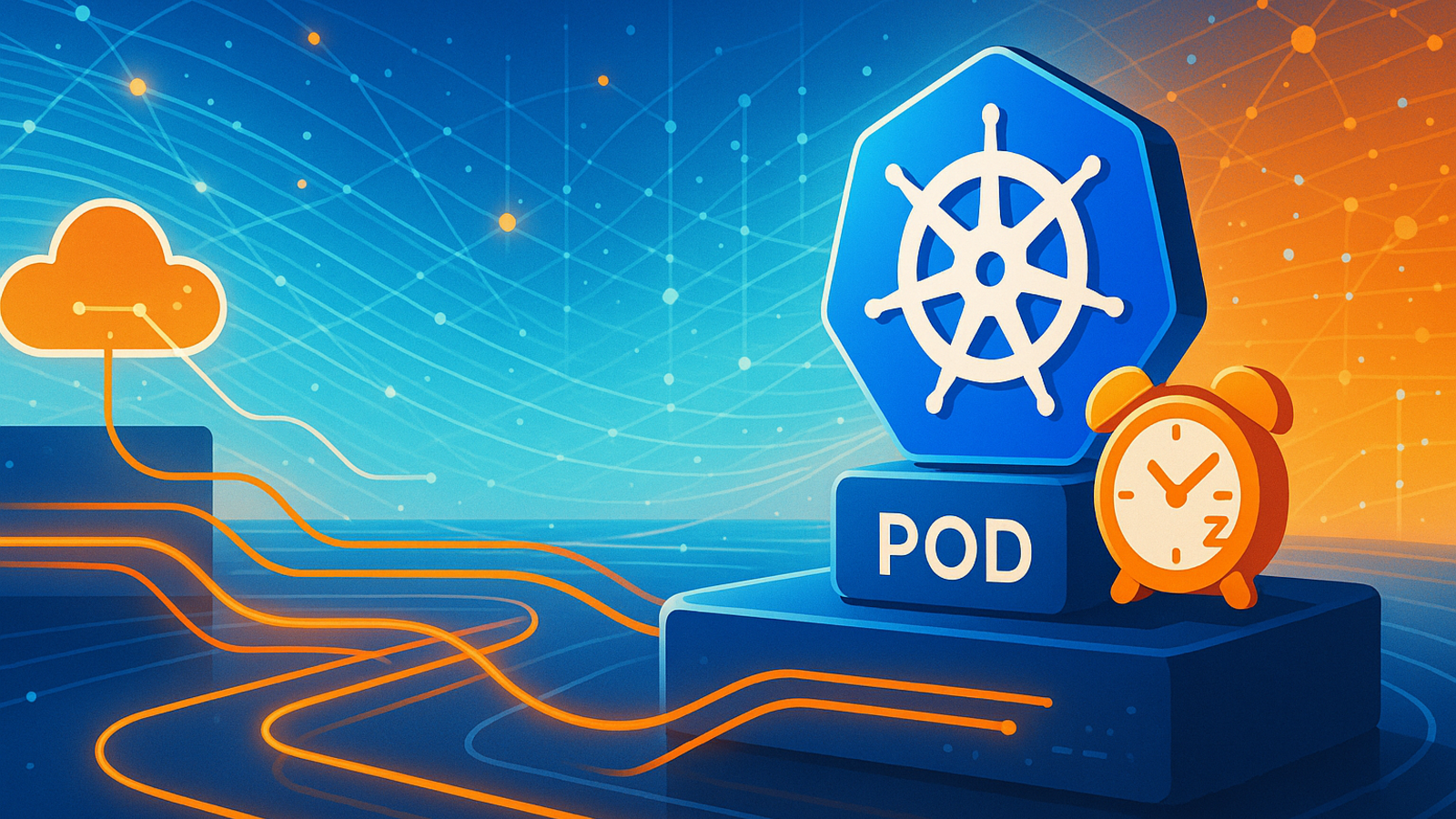
PodLifecycleSleepAction: Kubernetes Gets Smarter About Pod Shutdown
Kubernetes v1.30 introduces the PodLifecycleSleepAction feature, providing configurable sleep windows during pod termination to prevent dropped connections and request failures.

Kubernetes v1.30 introduces the PodLifecycleSleepAction feature, providing configurable sleep windows during pod termination to prevent dropped connections and request failures.

The CNCF introduces ModelPack, an open standard for packaging and managing AI model artifacts in container registries, bridging the gap between ML pipelines and Kubernetes operations.

Kubescape 4.0 delivers enterprise-grade runtime threat detection GA, AI-native security features, and posture scanning for agentic workloads.

Microsoft's new Argo CD extension for AKS and Azure Arc-enabled clusters brings enterprise identity management, Azure Linux hardening, and zero-trust authentication to GitOps workflows.

Red Hat has released OpenShift Service Mesh 3.3, bringing post-quantum cryptography (PQC), AI enablement features, and foundational support for external VM integration. Based on Istio 1.28 and Kiali 2.22, this release targets organizations preparing infrastructure for both emerging security threats and modern workload patterns. The timing is significant: while practical quantum computing attacks remain years […]

The Cloud Native Computing Foundation has unveiled the CARE Program (Certification Advancement & Recertification Experience), a significant restructuring of its certification renewal policy that addresses long-standing friction in maintaining multiple Kubernetes credentials. The announcement coincides with the Kubestronaut community surpassing 3,500 members—a milestone reflecting both the depth of Kubernetes expertise in the industry and the […]

Grafana has released the OpenLIT Operator, a Kubernetes-native solution for monitoring AI workloads without requiring code changes. The integration with Grafana Clouds AI Observability suite promises automatic instrumentation of LLMs, vector databases, and agent frameworks—addressing a critical gap as AI infrastructure becomes standard in production environments. For organizations struggling to gain visibility into distributed AI […]

The vLLM project has released version 0.18.0, a substantial update featuring 445 commits from 213 contributors including 61 new contributors. This release significantly expands deployment flexibility for production LLM serving with new protocol support, architectural improvements for multimodal workloads, and substantial enhancements to memory management that directly address operational pain points for large-scale inference deployments. […]

Platform Engineering Day’s growing emphasis on AI, security, and internal platform maturity is a useful signal: cloud-native teams are moving past raw infrastructure enthusiasm and toward the harder work of building governed, product-like platforms for developers and automation.

Morgan Stanley’s multi-year Flux journey shows that GitOps at enterprise scale is not just about choosing a reconciler. It is about onboarding, tenancy boundaries, source-of-truth design, and relentless tuning once the cluster count and resource count get large.

GitHub's March 2026 Actions update brings long-awaited cron timezone support and granular environment deployment controls.

OpenClaw 2026.3.13 introduces official Chrome DevTools MCP attach mode for debugging live browser sessions directly from your AI agent.

containerd 2.3.0 introduces the project's first annual LTS release with a new 4-month cadence aligned with Kubernetes. Learn how to upgrade safely.

The Kubernetes image promoter (kpromo) underwent an invisible rewrite that deleted 20% of the codebase while dramatically improving speed and reliability.

GitHub’s new OIDC support for repository custom properties is more than a convenience feature. It gives platform teams a cleaner way to express cloud access around repo attributes instead of maintaining brittle allowlists one workflow at a time.

Tekton Pipeline 1.10.1 is a modest patch release with one notable fix, but the release still stands out for something more important: the project keeps shipping attestation guidance right in the notes. For platform teams, that is the pattern worth adopting even when the diff itself is small.

GitHub’s new pre-commit ecosystem support turns one of the most annoying sources of silent repo drift into a first-class dependency workflow. The win is not just freshness. It is making hook upgrades reviewable, grouped, and testable like any other supply-chain change.

GitHub added 28 new secret detectors, broadened default push protection, and introduced more validity checks in March 2026. The real story is operational: secret scanning is becoming a faster feedback system for SaaS sprawl, not just a cleanup tool after a leak.

GitHub’s latest CodeQL release adds Java 26 support, better Maven version selection, and query updates across multiple languages. The operational takeaway is simple: code scanning accuracy increasingly depends on matching real build conditions, not just running static analysis somewhere in CI.

GitHub’s new ‘Lock advisory’ action lets repo admins freeze draft security advisories and private vulnerability reports while discussion continues in comments. For DevSecOps teams, it’s a governance primitive: reduce accidental edits, preserve triage decisions, and keep the record stable before publication.